Is your master ready?Ask the Kouncil.
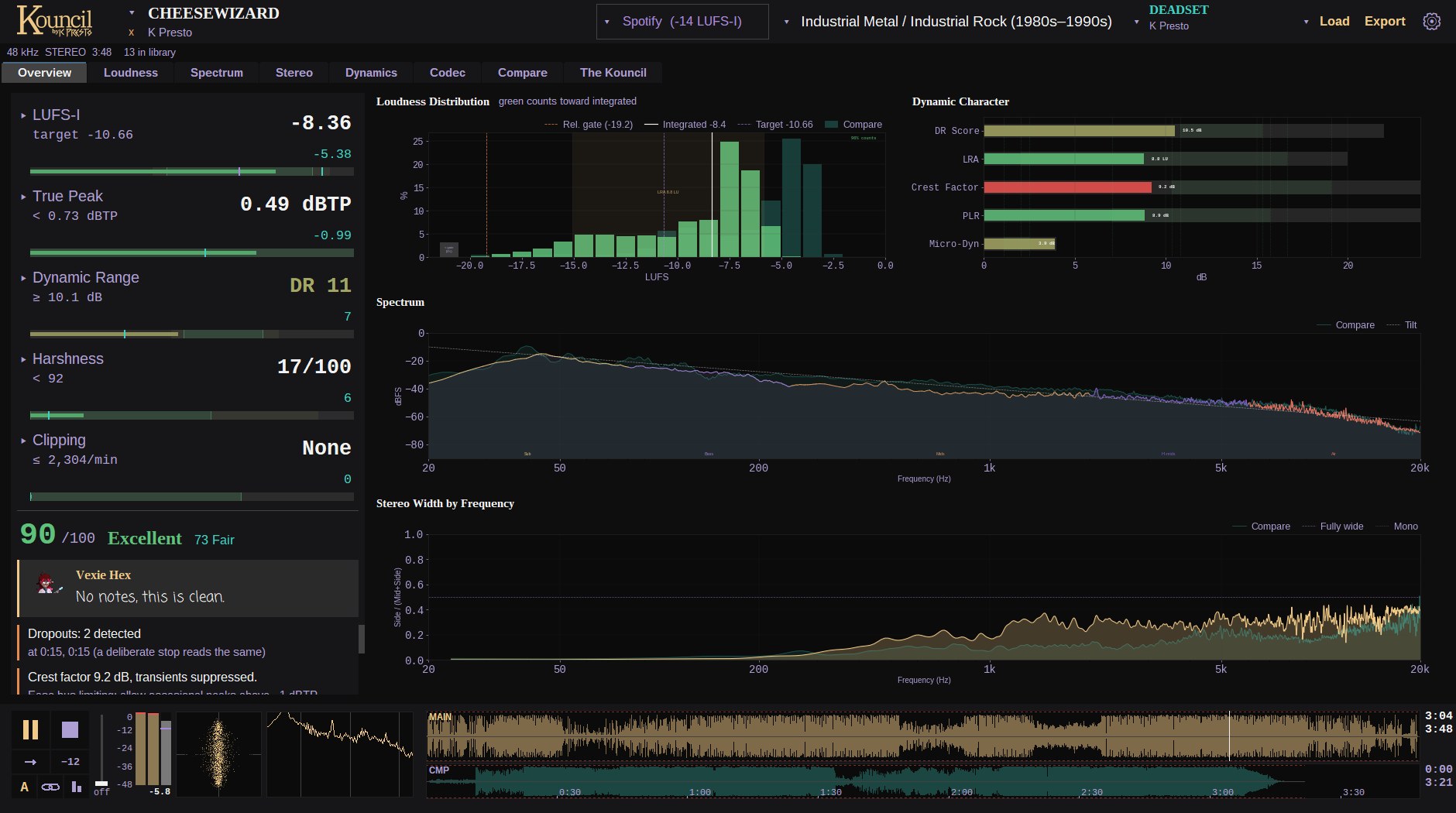


Loudness, tone, stereo, dynamics and real codec tests, judged against 2,499 commercial masters and explained four ways, from "it sounds a bit loud" to the BS.1770 math.

TaylorHi! Drop a song you've finished on me and I'll tell you if it's ready to put out. No jargon, promise.
Vexie HexGot a bounce? Drop it here. I'll tell you what's off and which knob to turn.

Kate AdagioLoad a master. Loudness, true peak, tone, stereo, dynamics and eight codec paths, judged against your genre's references.
K0ndukt0rSupply one finished stereo master. I will return about forty measurements, each with its derivation.
The Kouncil
Four perspectives.
Every chart, number and setting in the app is written four ways. Pick your mix assistant to guide your feedback and tooltips.
Try it out on this page. Pick a character below.
Overview
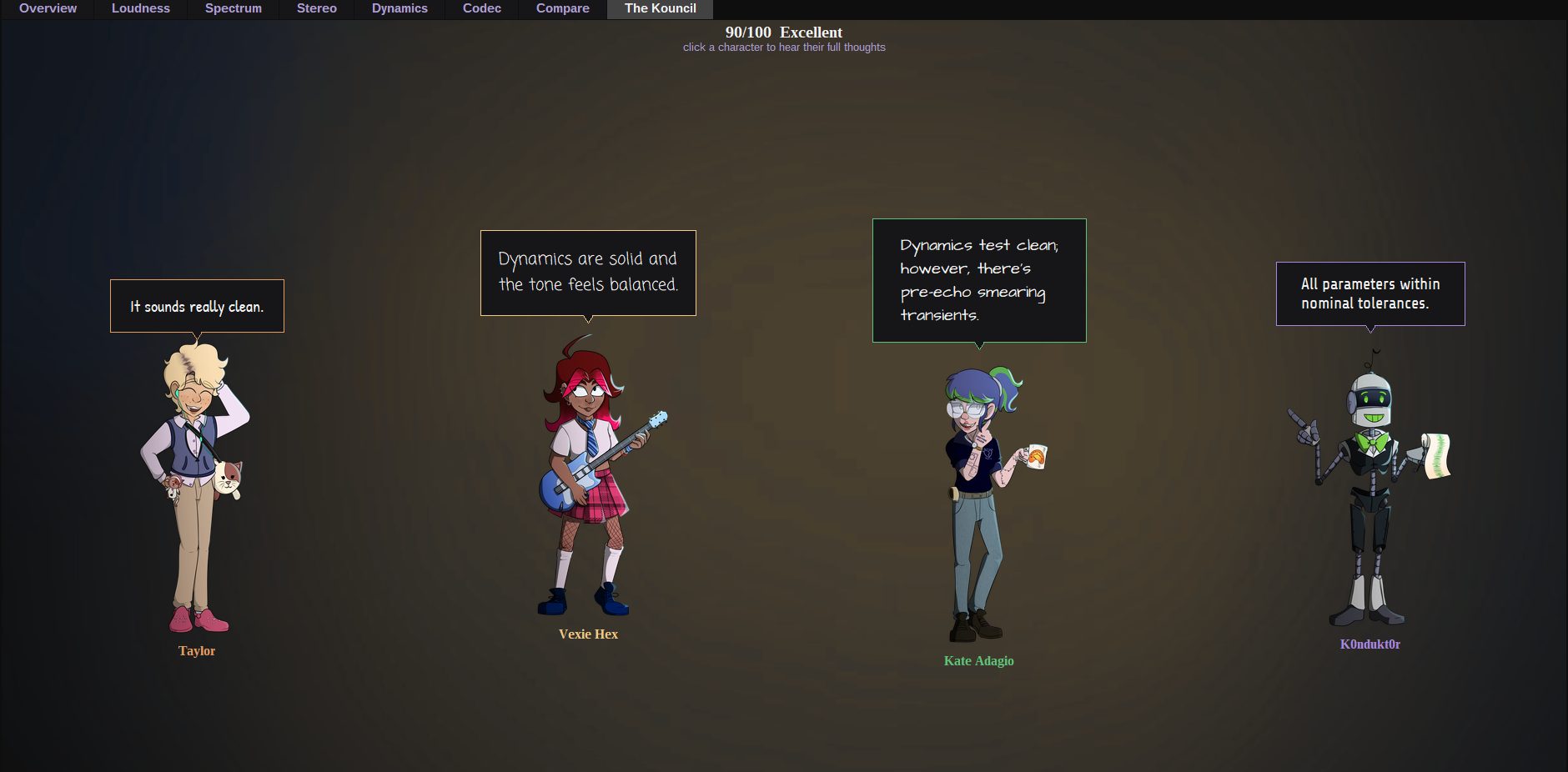
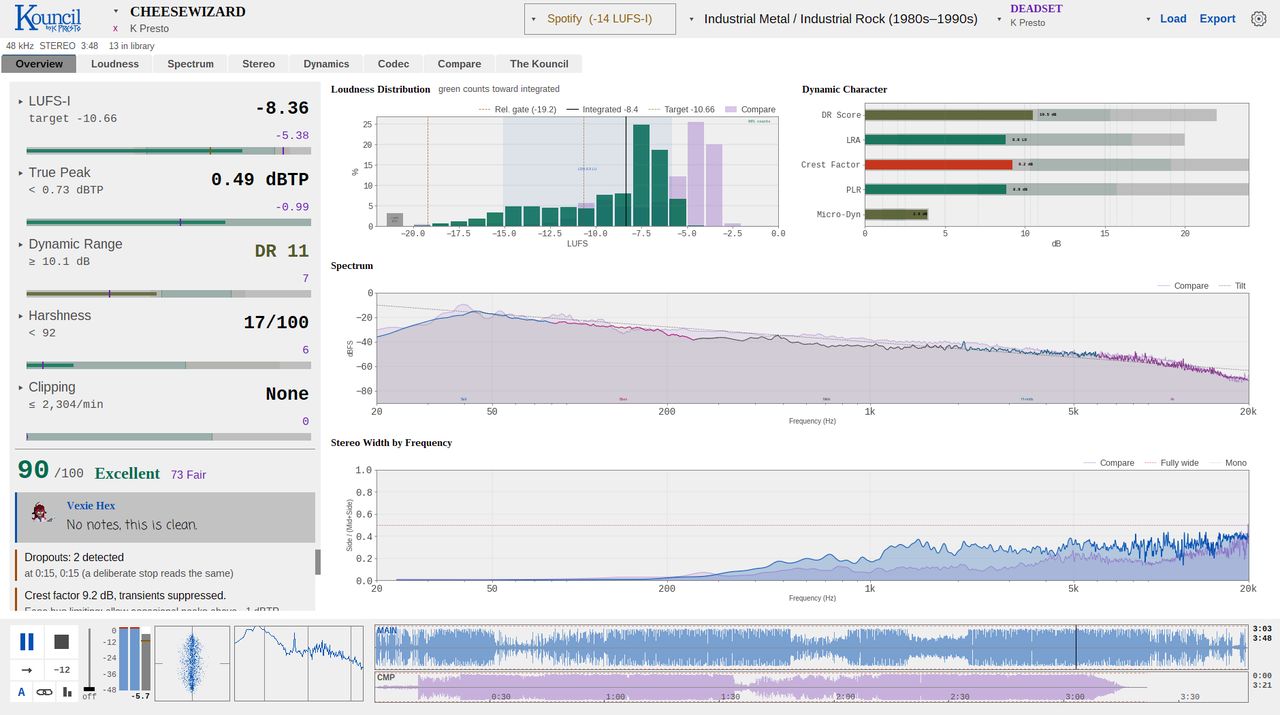
Simple, actionable feedback, with all the numbers to back it up.

TaylorYou get a number out of 100 and a short list of what's wrong, biggest problem first. No degree needed.

Vexie HexLoad the bounce, read the score, fix the first red line. Every finding says what to turn and roughly how far.

Kate AdagioFive headline metrics against target, a health score and prioritized findings with fixes. Profile-aware, so a dense genre isn't punished for being dense.

K0ndukt0rHealth = 100 − Σ deductions over loudness error, true-peak excess, DR, clipping, correlation, mono loss, harshness and more. Zero deduction inside the active profile's range.
Listening
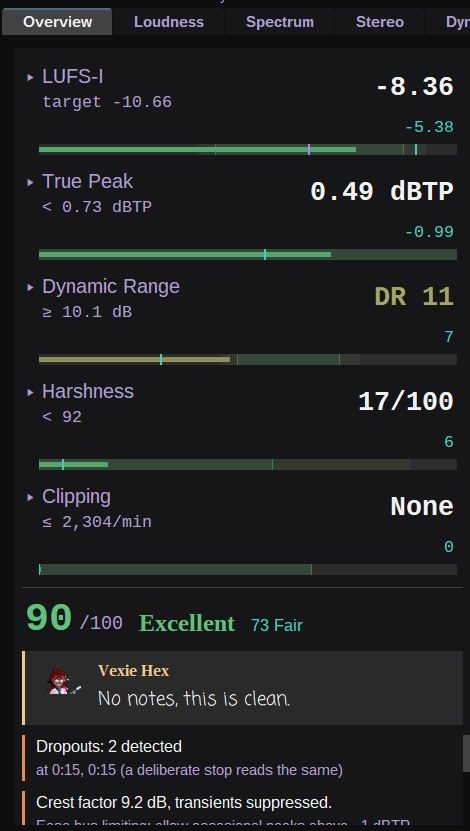
Point at a problem and hear it.
TaylorDrag across any spectrum and you hear just those frequencies. Click any timeline graph to jump to that spot.
Vexie HexFind the harsh frequency by ear, read the number, put your EQ cut there. A/B against your reference, level-matched so louder doesn't win. Click any timeline to jump to that moment.
Kate AdagioBand audition on every spectrum, level-matched A/B with synced playheads, range and loop, a dim switch, live goniometer, spectrum and loudness meter. Click any frequency graph to solo a region, click any time graph to jump that section.
K0ndukt0rA log-frequency band-pass that glides with coefficient crossfades and a look-ahead limiter behind it. Playback runs in its own process over shared memory, so analysis never causes a dropout.
Profiles
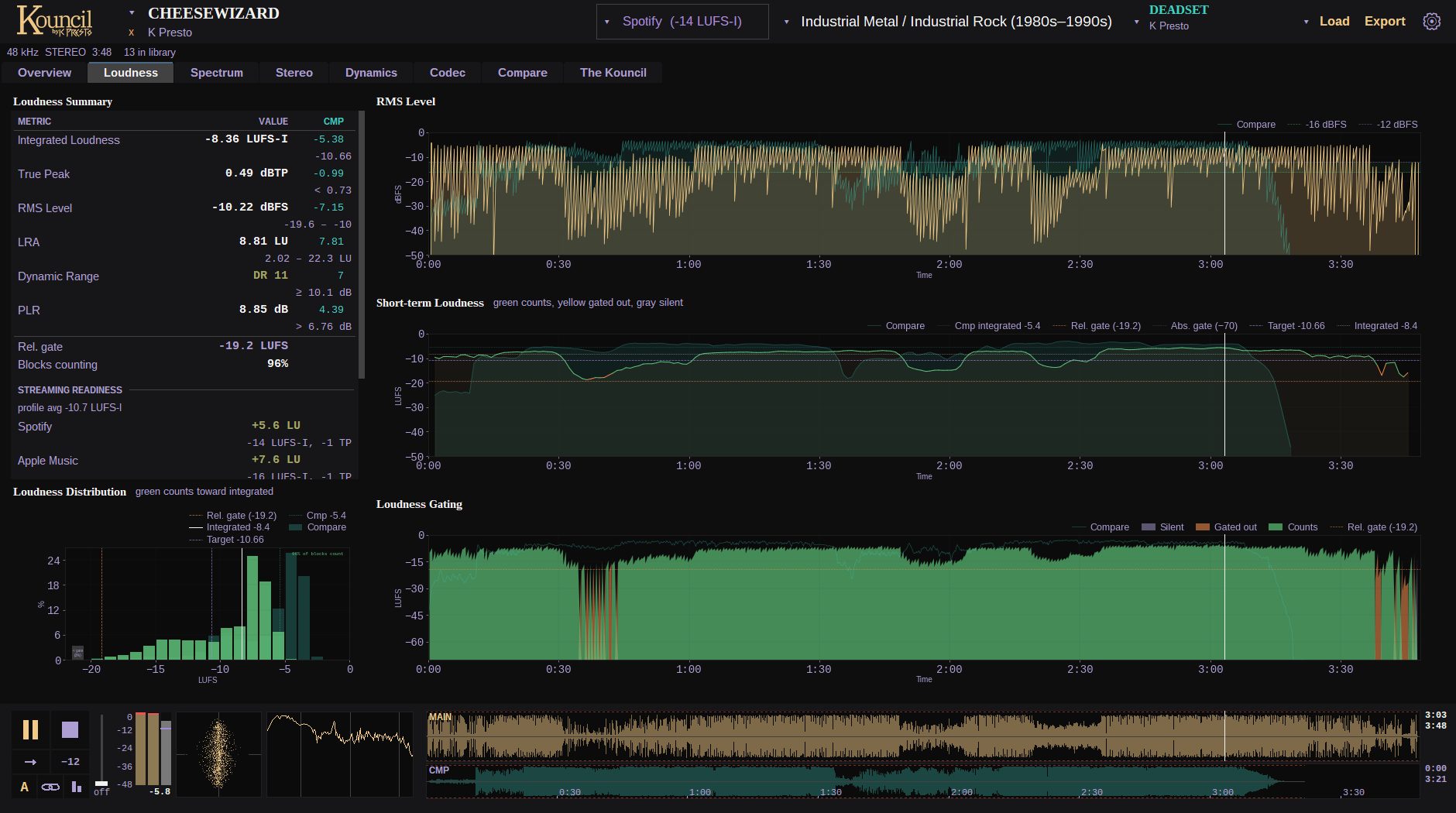
Profiles built from the greats.
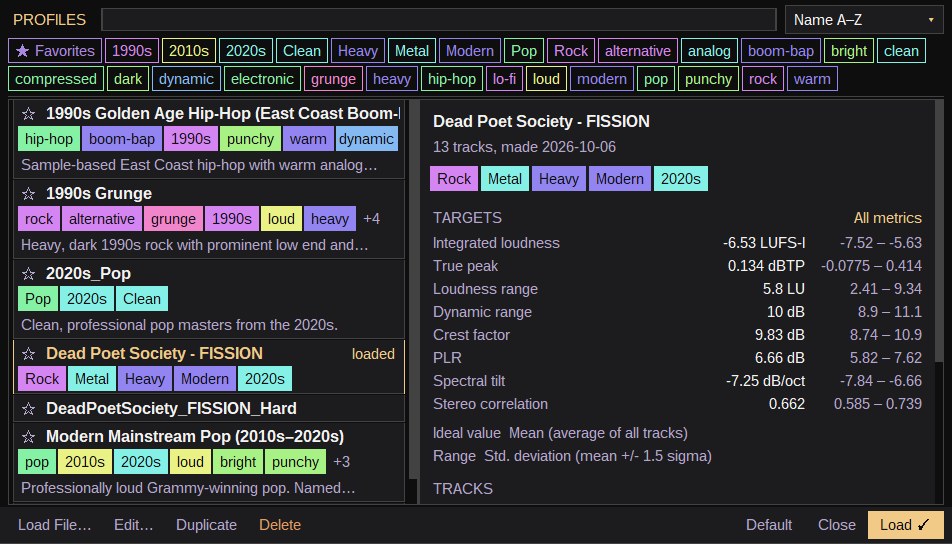
TaylorA metal song and a jazz song shouldn't be graded the same. Pick your style and Kouncil stops nagging about what's normal for it.
Vexie Hex100 genre profiles built from real releases. Pick the closest, or build your own from the records you're chasing.
Kate AdagioPer-metric reference ranges and an average spectrum from 2,499 commercial masters. Build a profile from your own references and share it as one file.
K0ndukt0rEach profile stores mean, median, trimmed mean, σ, quartiles and percentiles per metric. Target and range methods are chosen after the fact, without rebuilding.
Albums
Glue an album together.
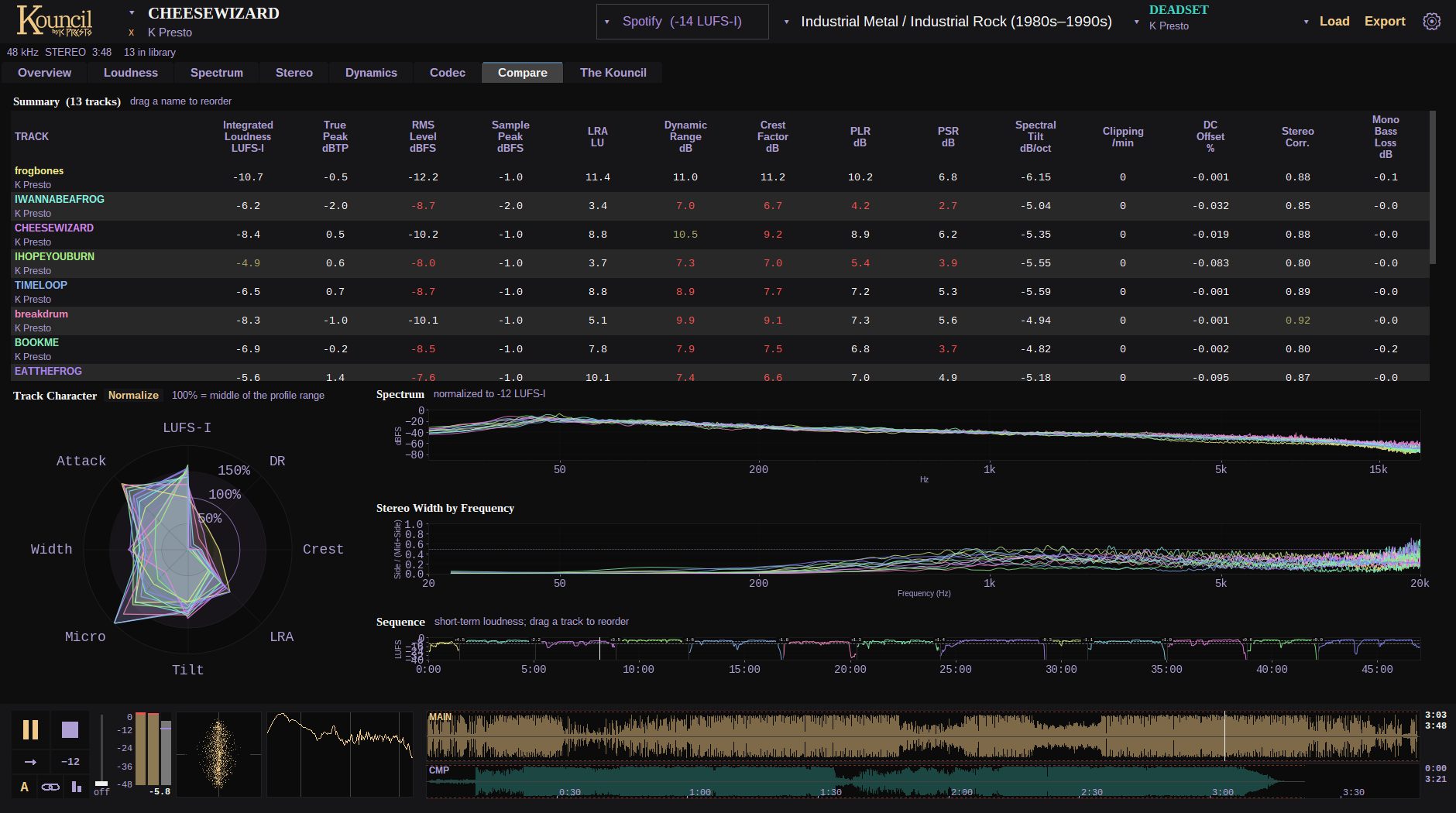
TaylorSee if one song is way louder or brighter than the rest before your listeners do.
Vexie HexLoad the whole EP. Spot the track that jumps out, drag the order around, and audition every transition straight from the sequence chart.
Kate AdagioEvery track's metrics side by side with outliers flagged, overlaid spectra and width, and the loudness step at every join of the running order.
K0ndukt0rOutliers by σ against the album mean, per metric. Radar axes normalized to the profile's range, so a conforming track draws a circle.
Codecs
See and hear what streams.
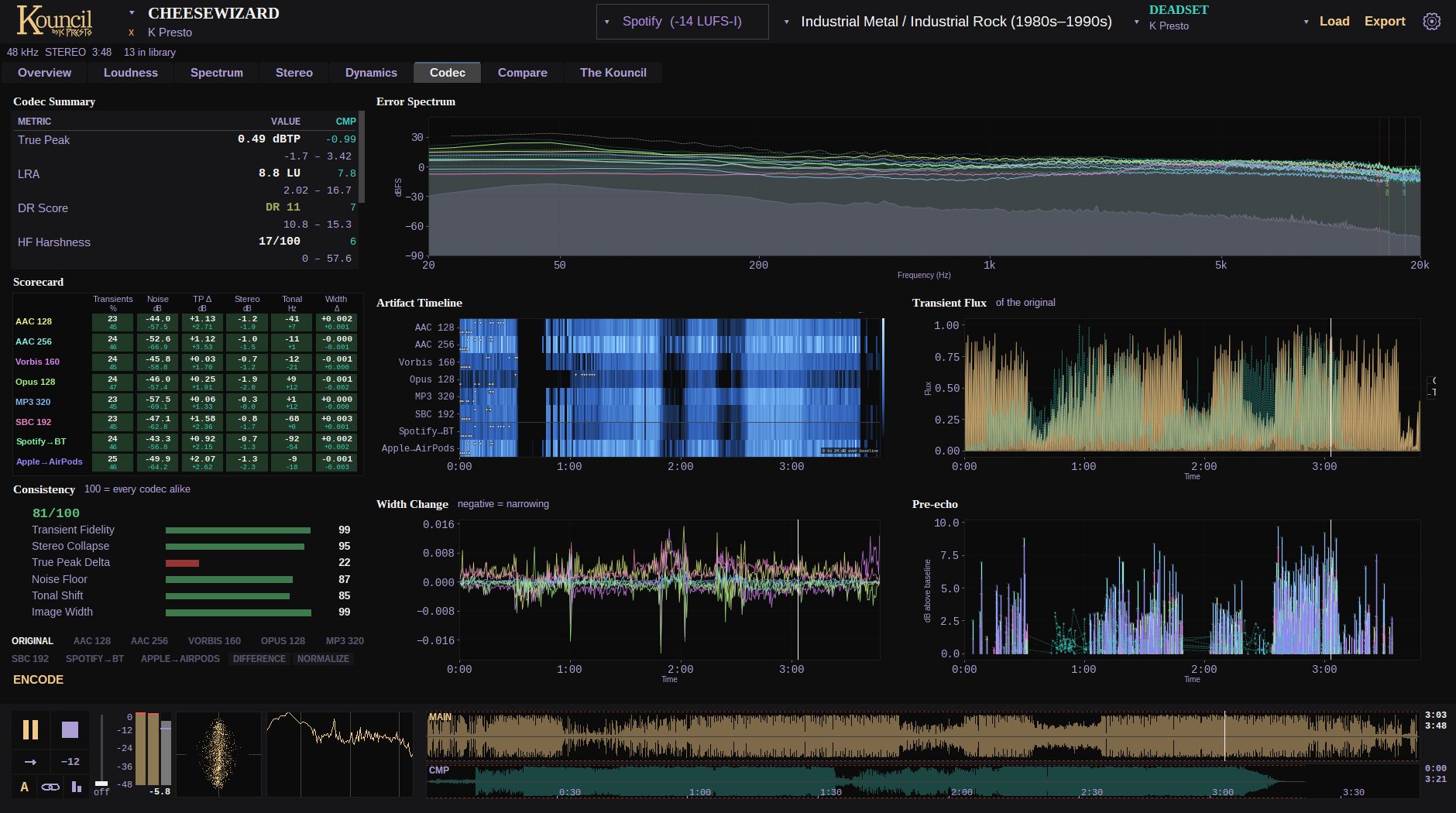
TaylorSpotify and Bluetooth squash your song to send it. Kouncil does the squashing for real, then plays you what got lost.
Vexie HexFlip between your master and how it sounds on AirPods, or on Spotify over Bluetooth, mid-playback. DIFFERENCE plays only the damage.
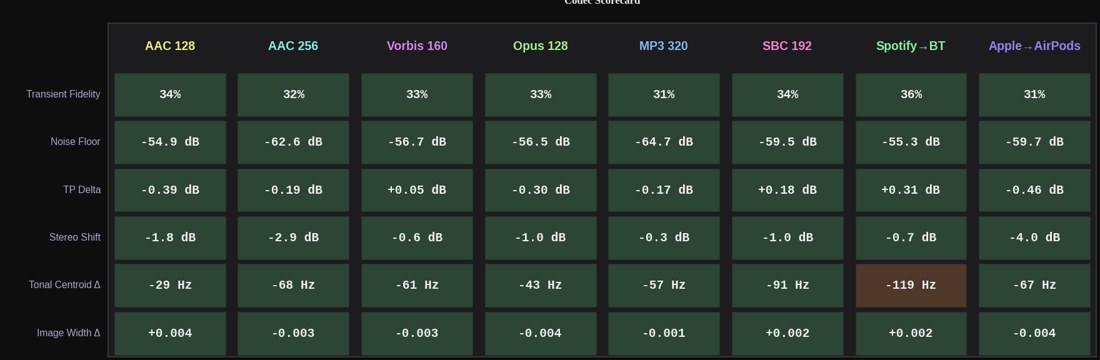
Kate AdagioEight real encode and decode paths, Bluetooth chains included. True-peak overshoot, transient fidelity, stereo collapse and pre-echo per codec, and you can listen to each.
K0ndukt0rffmpeg round-trips aligned to the sample by cross-correlation. Error spectra against a quarter-Bark masking threshold; artifacts scored against each codec's own baseline.
Reports
Deliver.
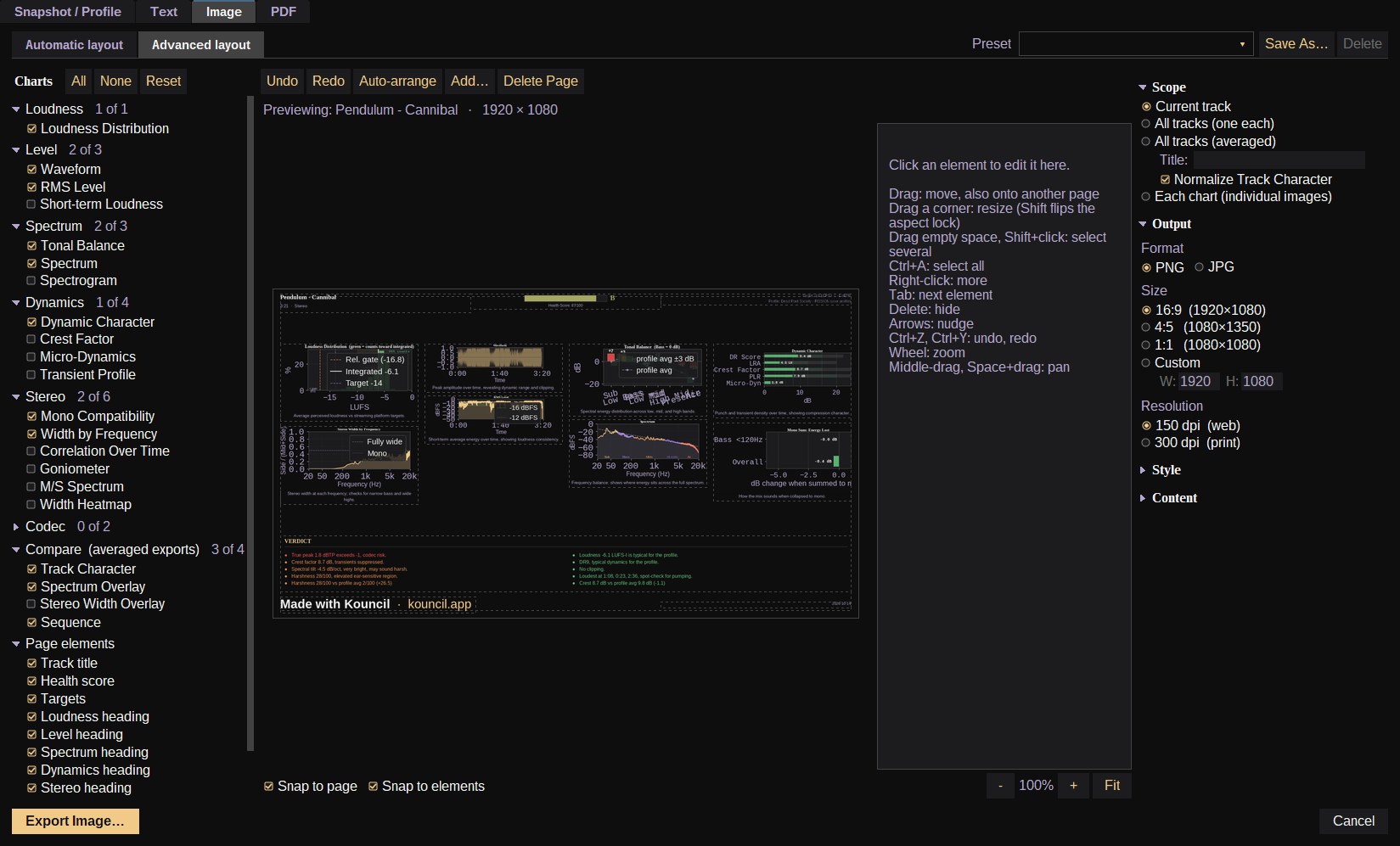
TaylorMake a picture of any song's measurements to share, with us explaining it.
Vexie HexSend your engineer a PDF, post a chart, or save a snapshot to share your favorite reference tracks with your friends.
Kate AdagioText, image and PDF reports that name the target and profile, snapshots and profiles as single files, and a page editor for layouts you place by hand.
K0ndukt0rQuick, automatic text, image, and PDF layouts and a multi-page editor for custom showcases.
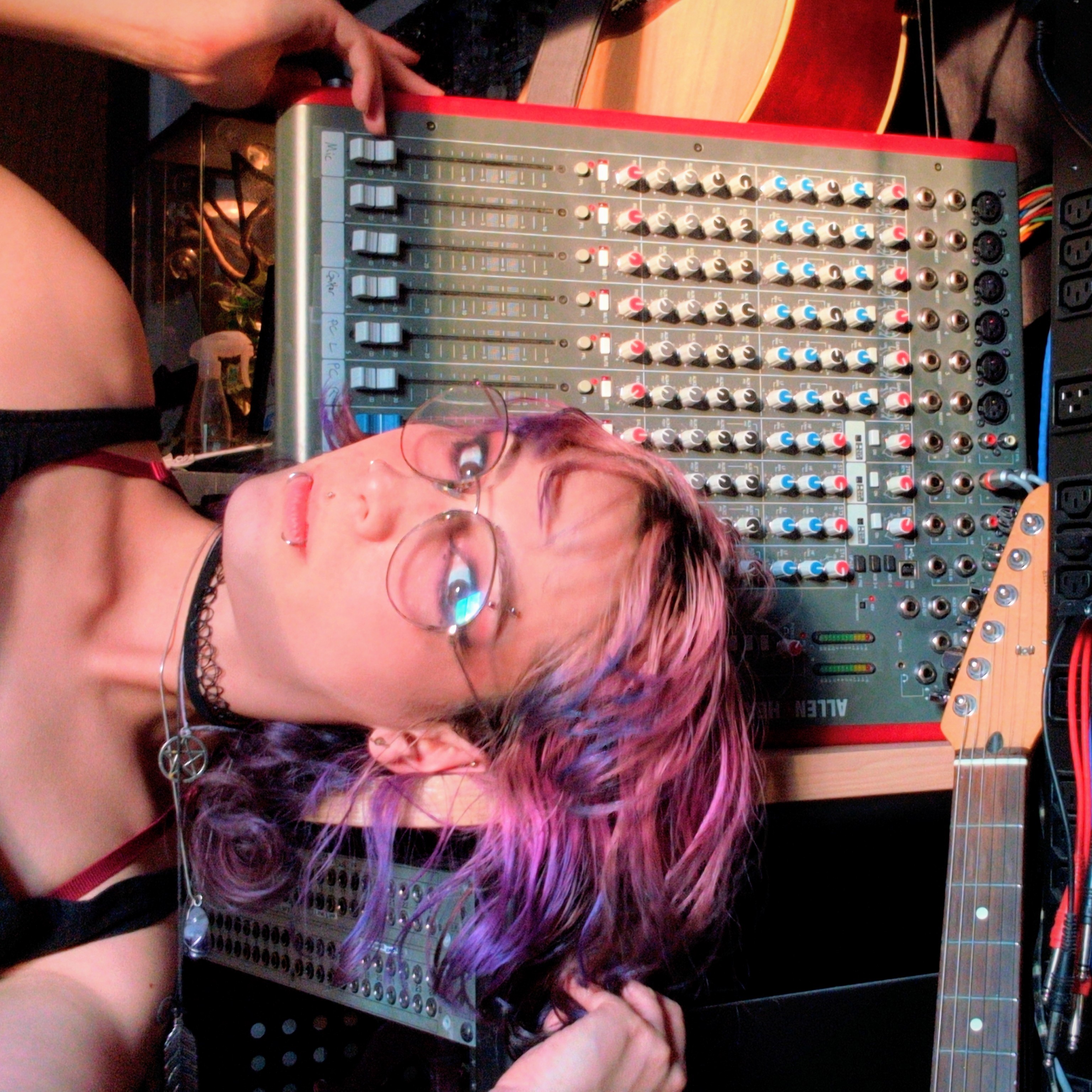
No AI inside
Made by a human.
For humans.
No machine learning, no generated text, no robot between you and your master. Every number comes from a formula I documented, and I wrote every word the characters say before you ever pressed Load.
- Formulas, not a black box
- Ask why a track scored 87 and there's an exact answer, no fuzzy logic.
- References with names
- I spent weeks researching and evaluating historically reknowned masters, from Van Gelder's jazz to Grammy-winning pop.
- Ranges from real masters
- Every range was measured from the highest quality cuts of each reference track.
- A script, not improvisation
- Each line is written for one situation and only said when the measurement calls for it. No LLM is generating text on the fly.
- No flattery
- A character only notes what the tables mark as a problem. No compliments padded in to keep you happy.
- Same track, same answer
- No random numbers under the hood messing with your results, and nothing about your music is sent anywhere.
Designed and built by

Character design and illustration by

K0ndukt0rI'm the only robot here. I'm drawn by hand, and I read from a script.
Borrowed science
Some of the best audio tools weren't made for audio.
When a problem in a master turned out to be a problem another field had already solved, Kouncil took the answer.
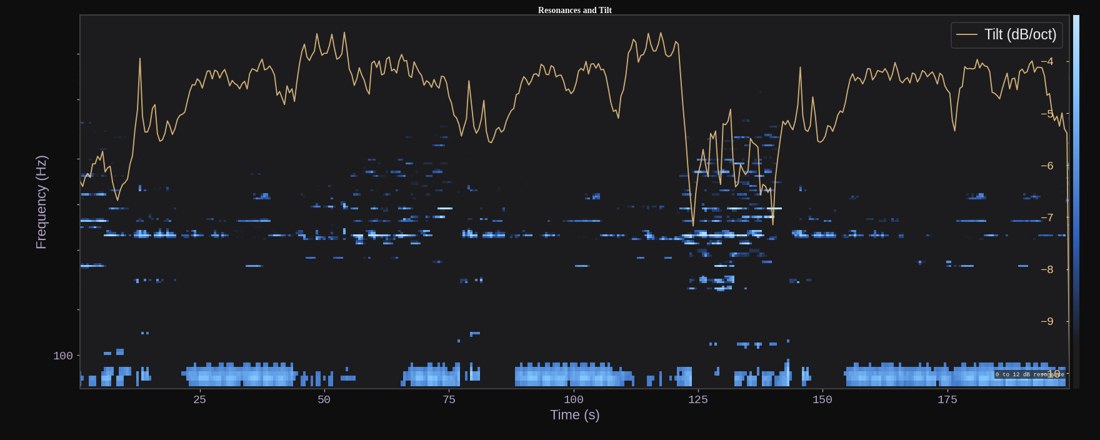
- Resonances, found like spectral lines
- Spectroscopy's baseline subtraction finds the narrow peaks. Keeping only what is there the whole song through tells a ringing frequency from the notes you play.
- Ranges, set like a blood test's
- Every profile is a reference interval, laboratory medicine's "normal range", measured from real records with robust statistics so one odd master can't skew it.
- Codec frames, checked like JPEG blocks
- The grid you see in an over-compressed photo has an audio twin at the codec's frame edges, and Kouncil looks for it the way image-quality metrics do.
- Pumping, measured like a lecture hall
- The speech-intelligibility test for rooms measures how much loudness movement survives. Kouncil asks the same of your limiter.
- Codec delay, timed like sonar
- Each decoded version is lined up with your master to the sample by the cross-correlation sonar uses to time an echo.
- Timelines, drawn like an oscilloscope
- Each pixel keeps the loudest and quietest moment it covers, so a single spike in a ten-minute track still shows at any zoom.
Analysis
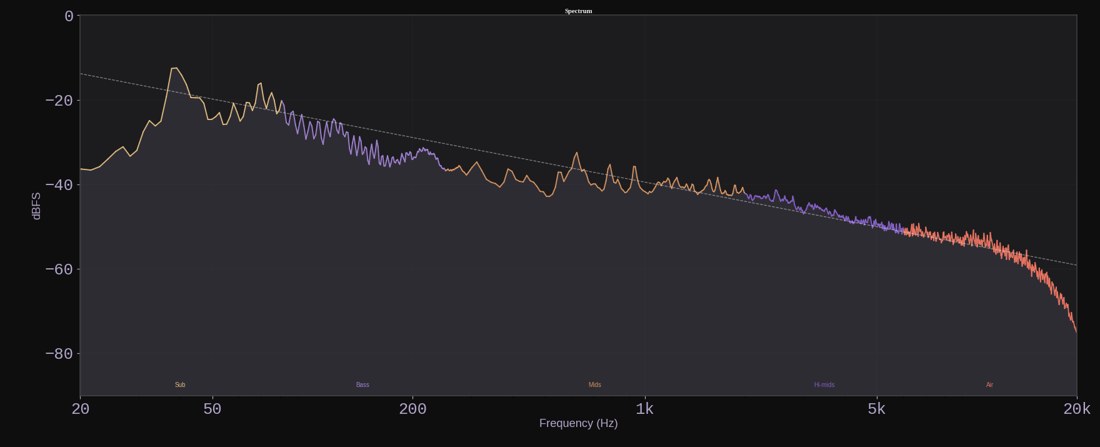
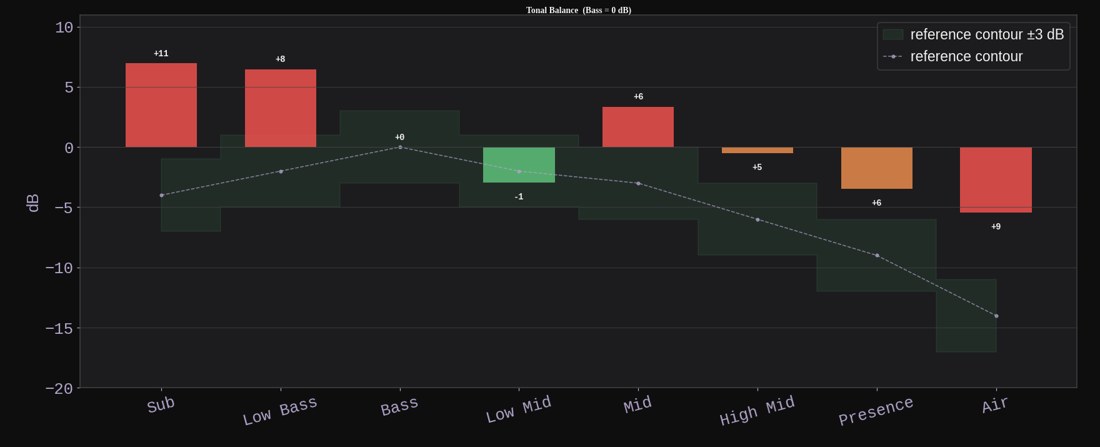
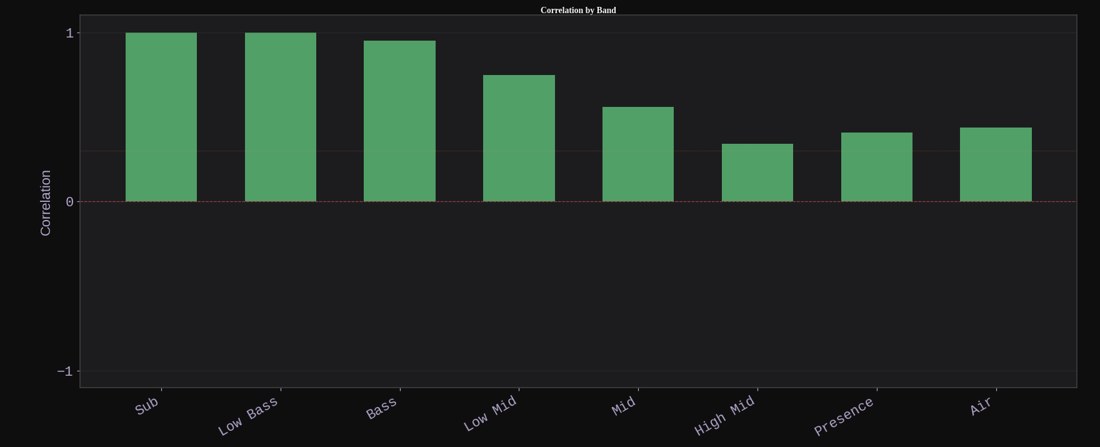
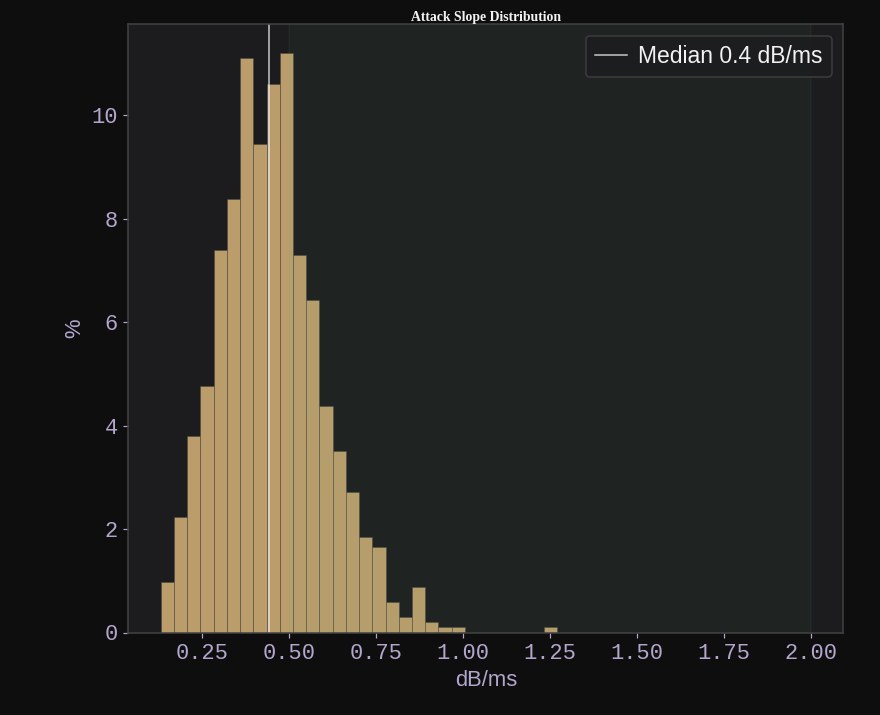
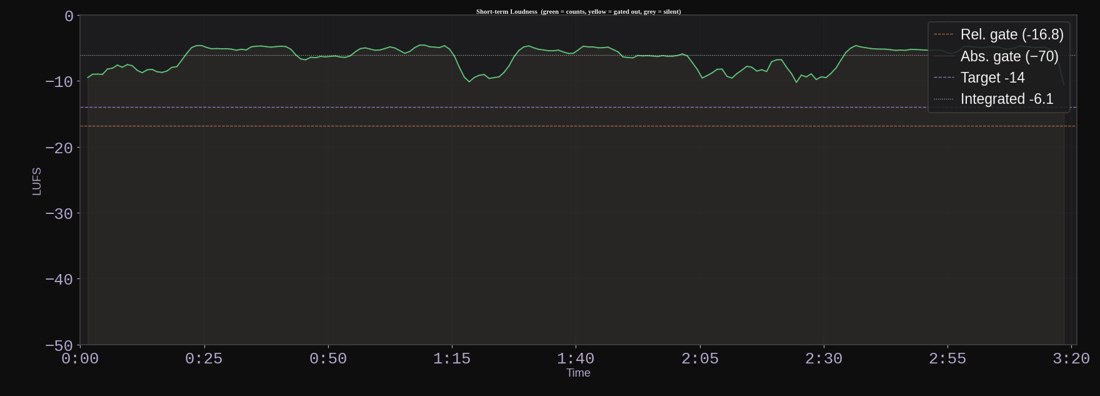
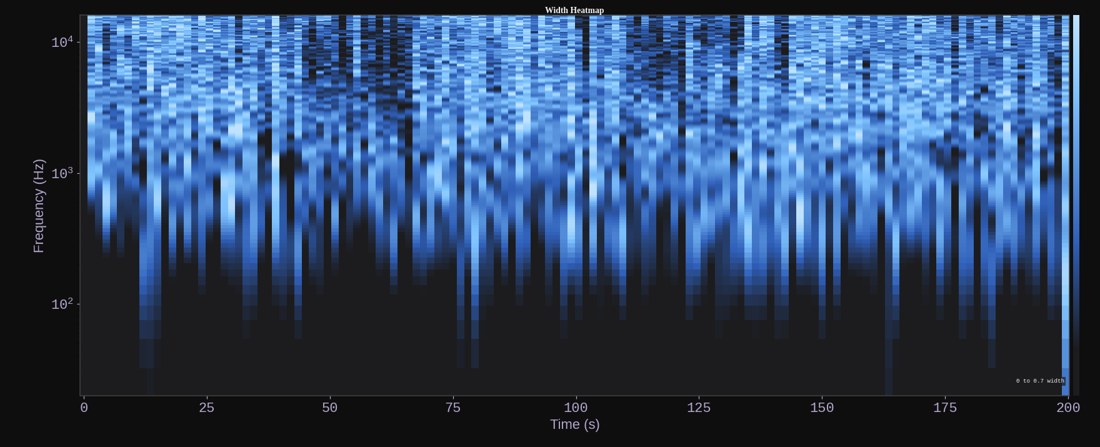
Thirty-two charts. Every one explains itself.
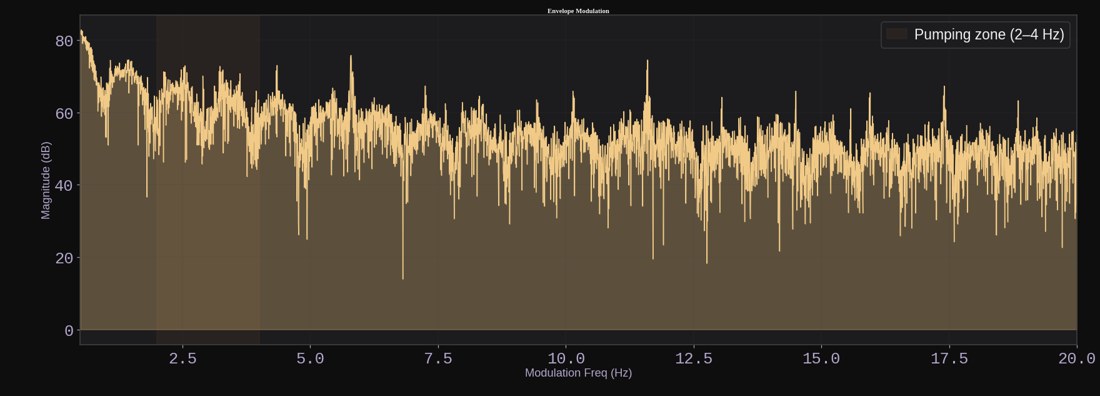
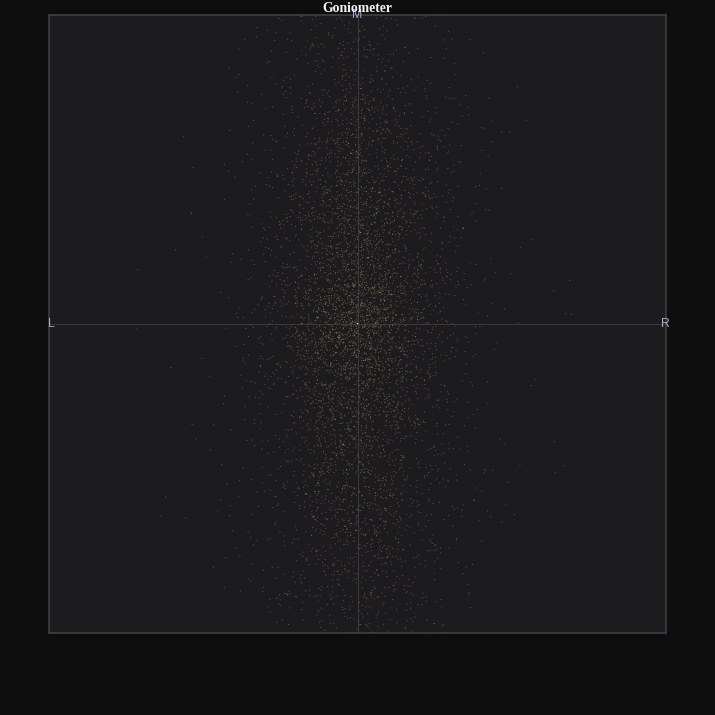
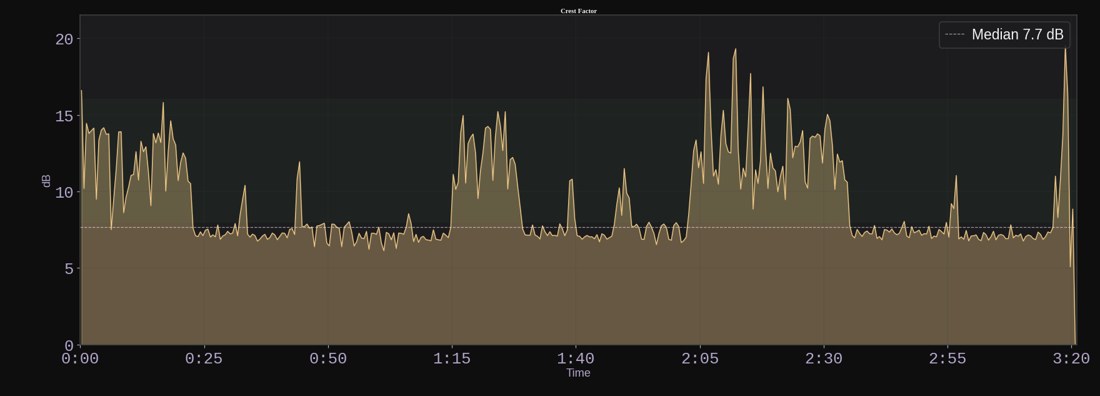
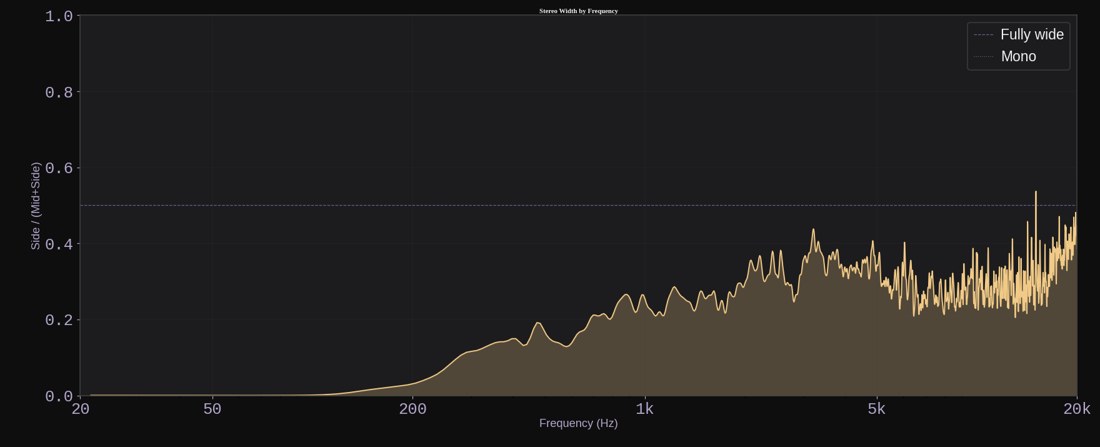
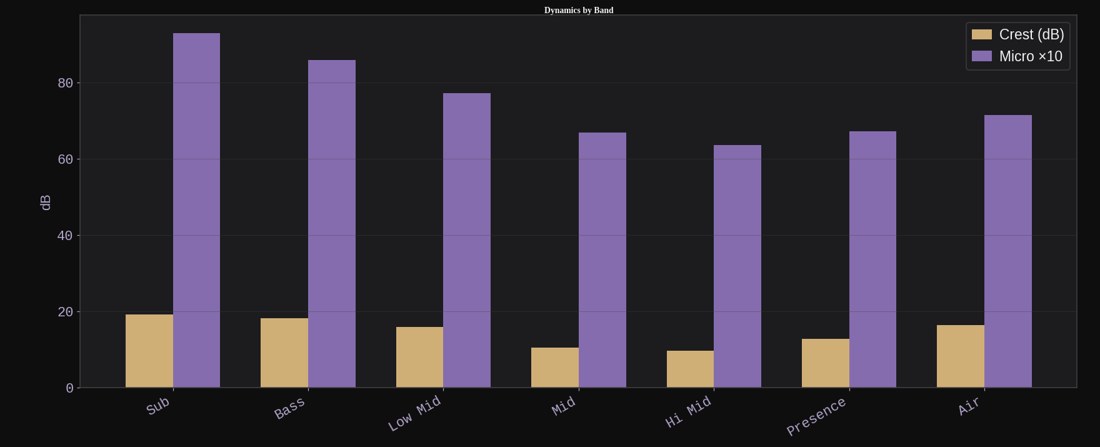
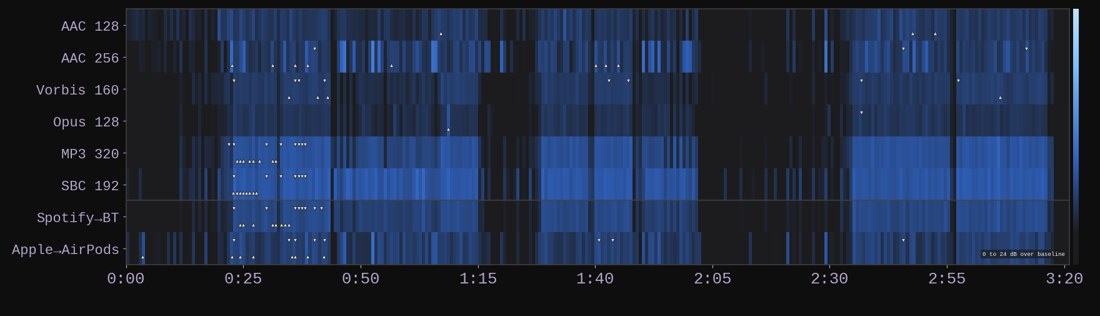
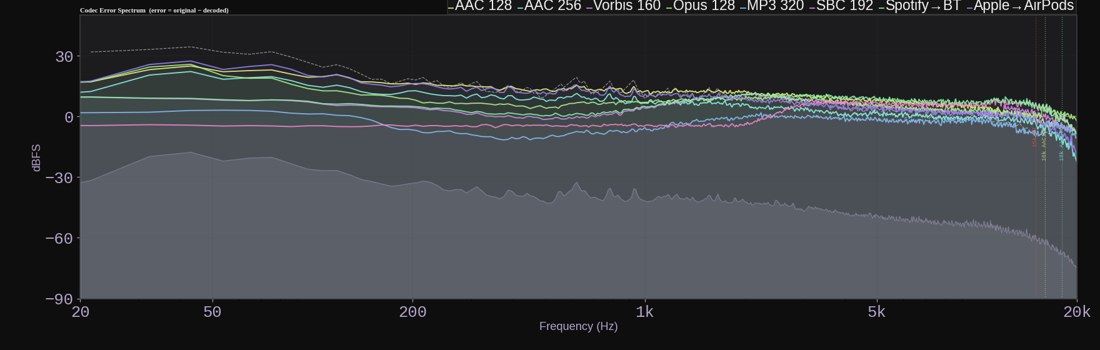
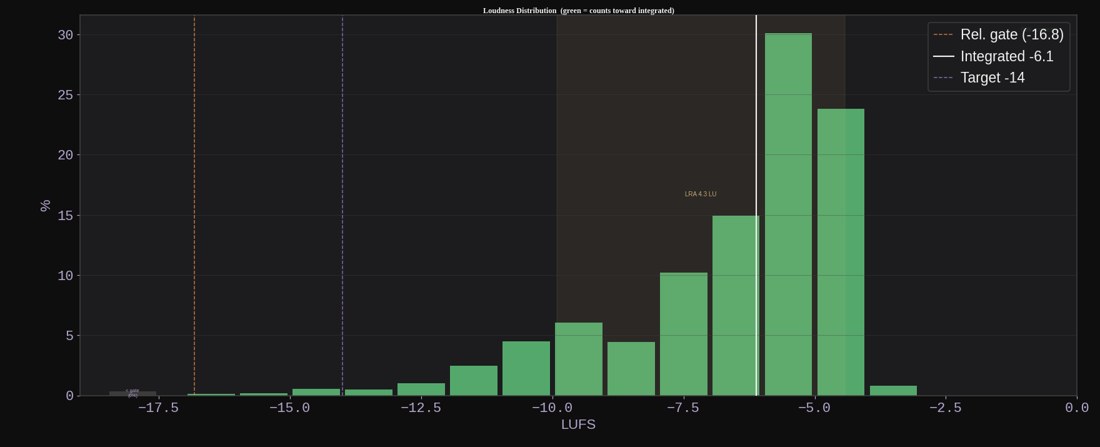
Hover anything in Kouncil, a line, a band, a single bar, and your character says what it means for your track.
Skins
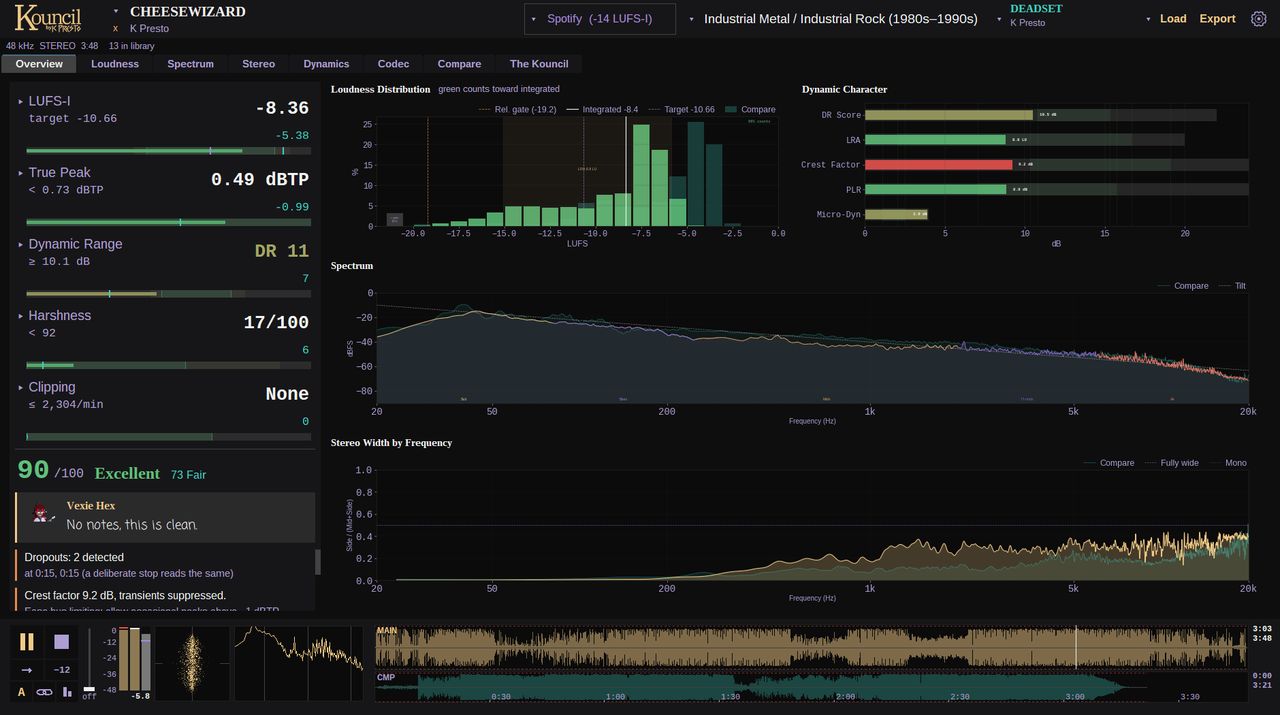
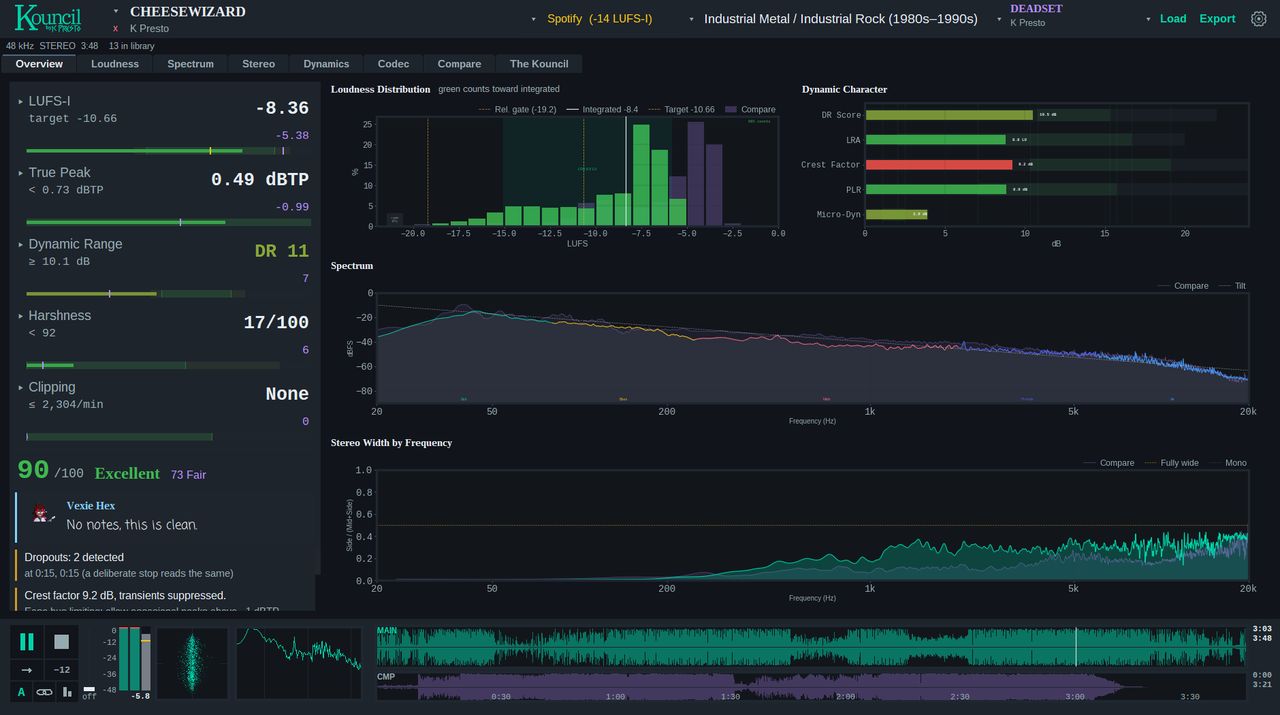
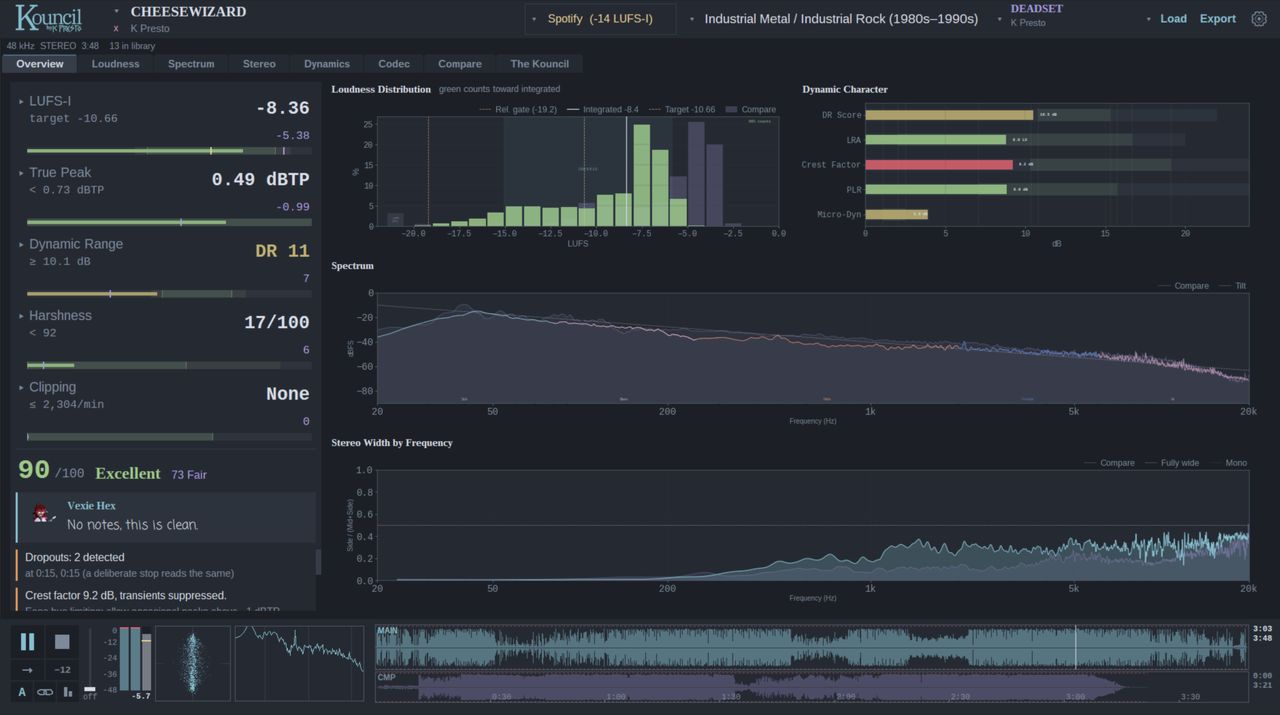
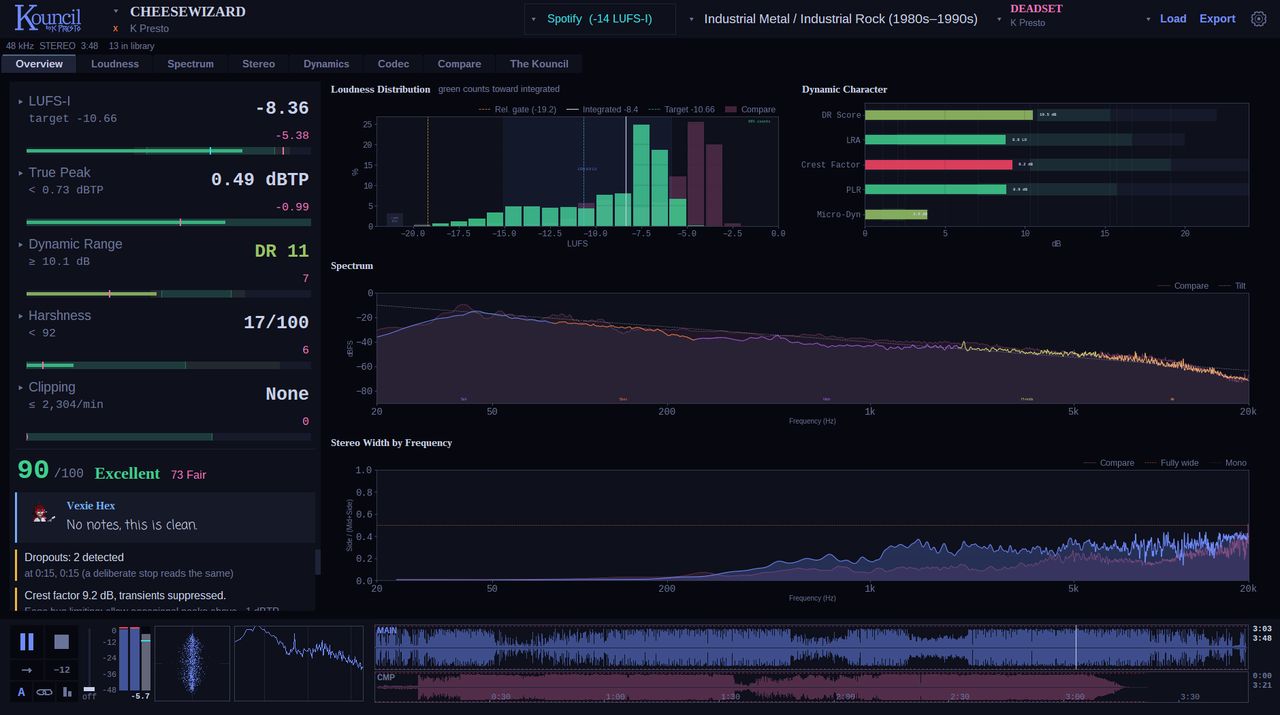
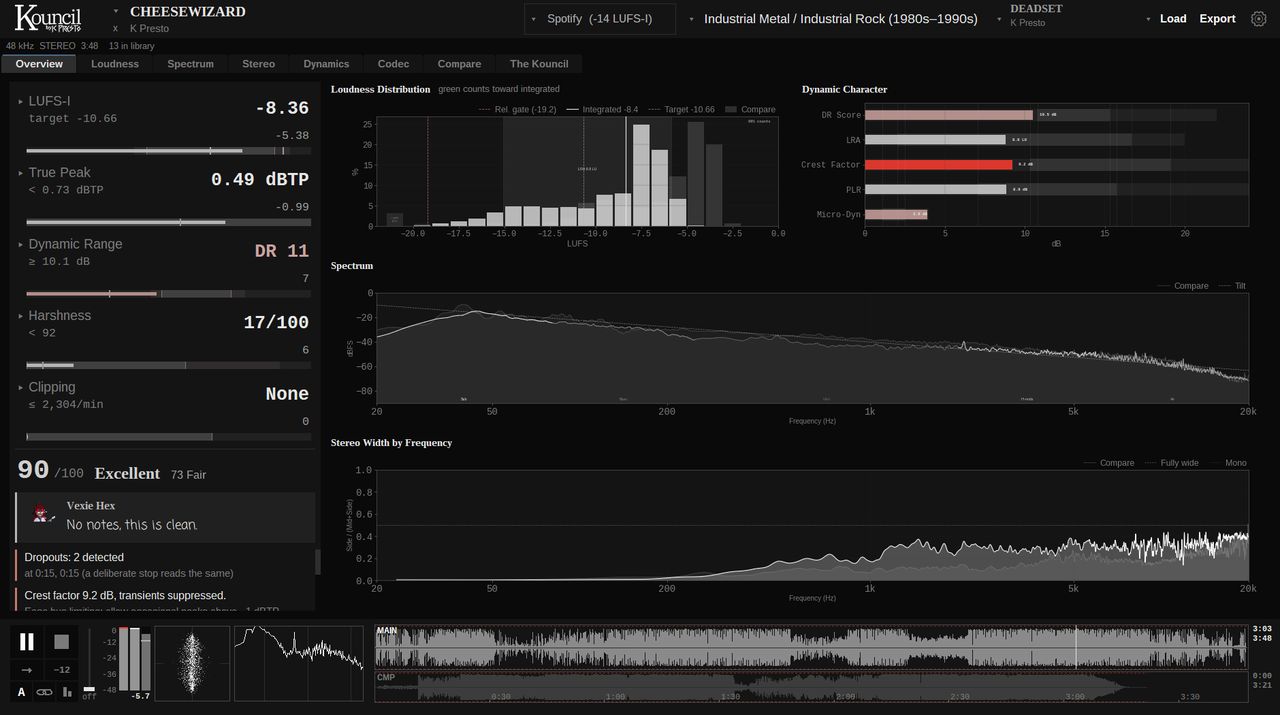
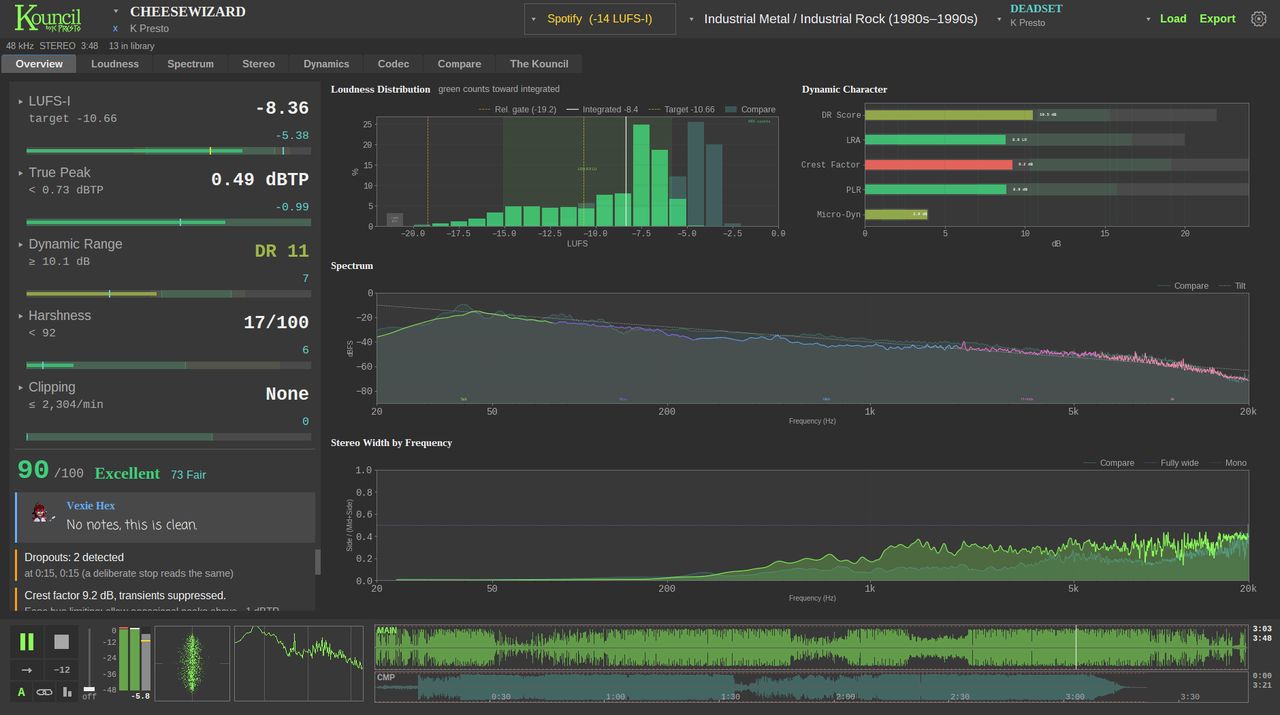
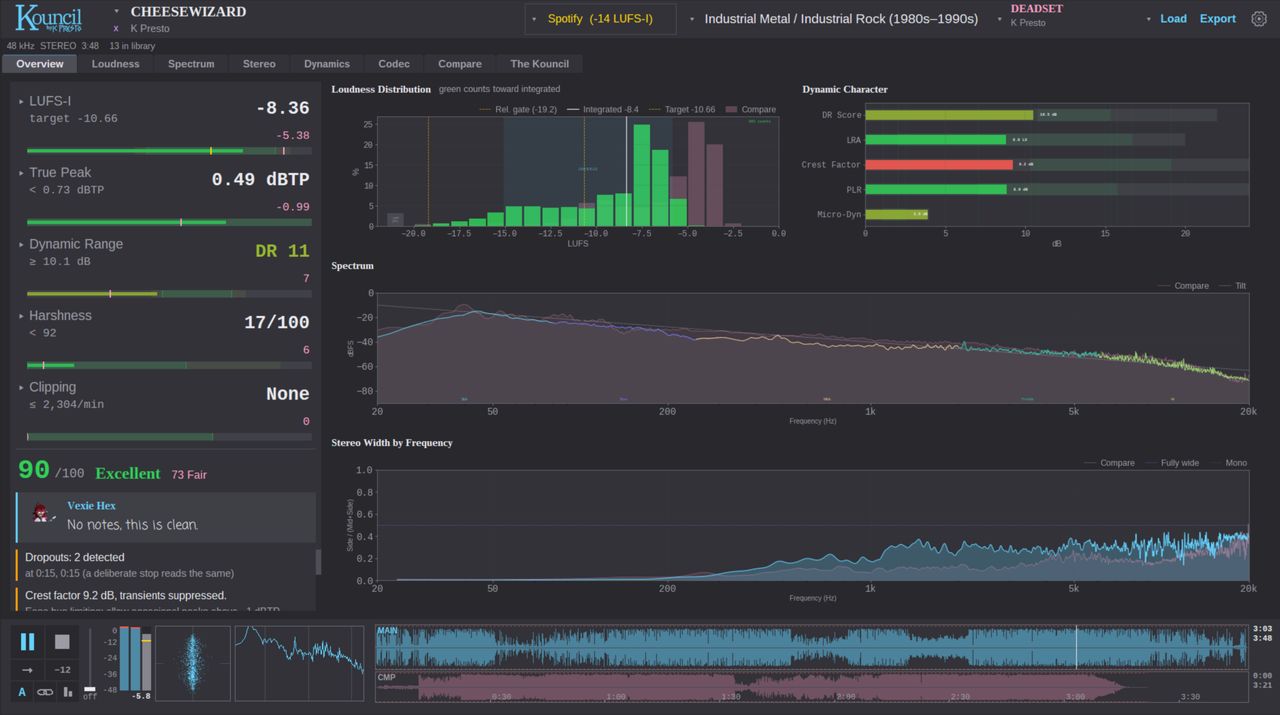
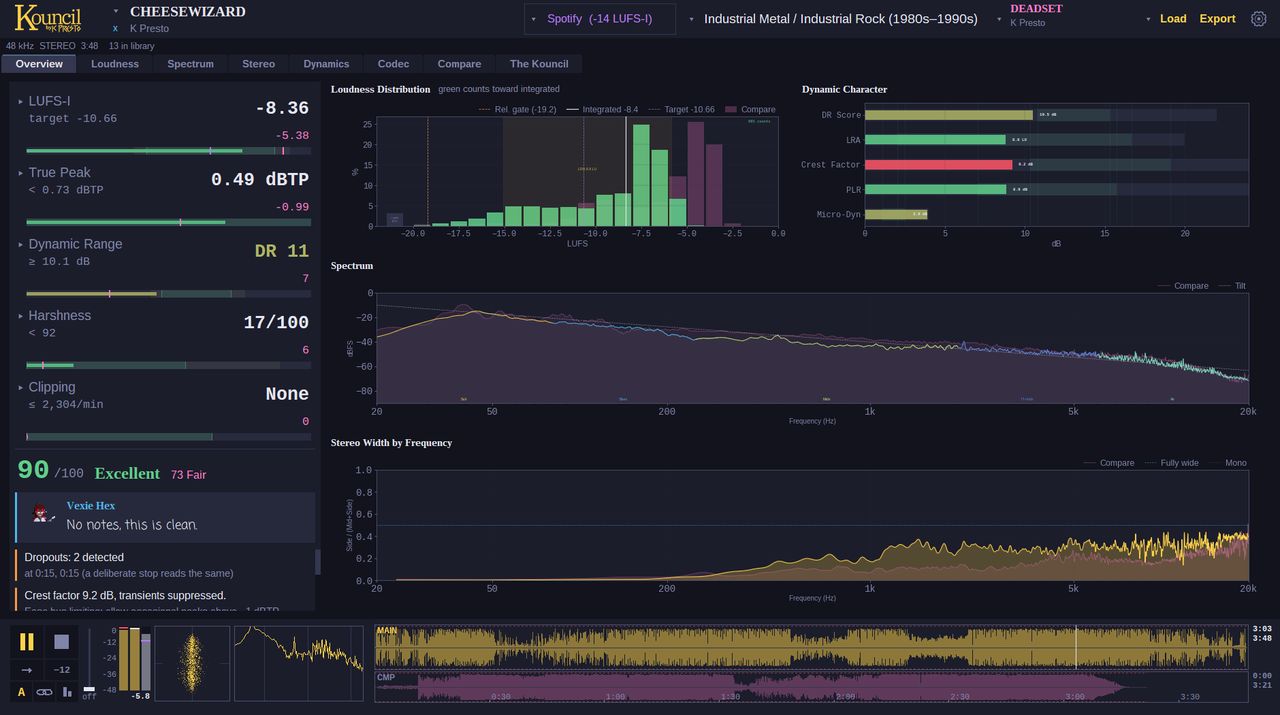
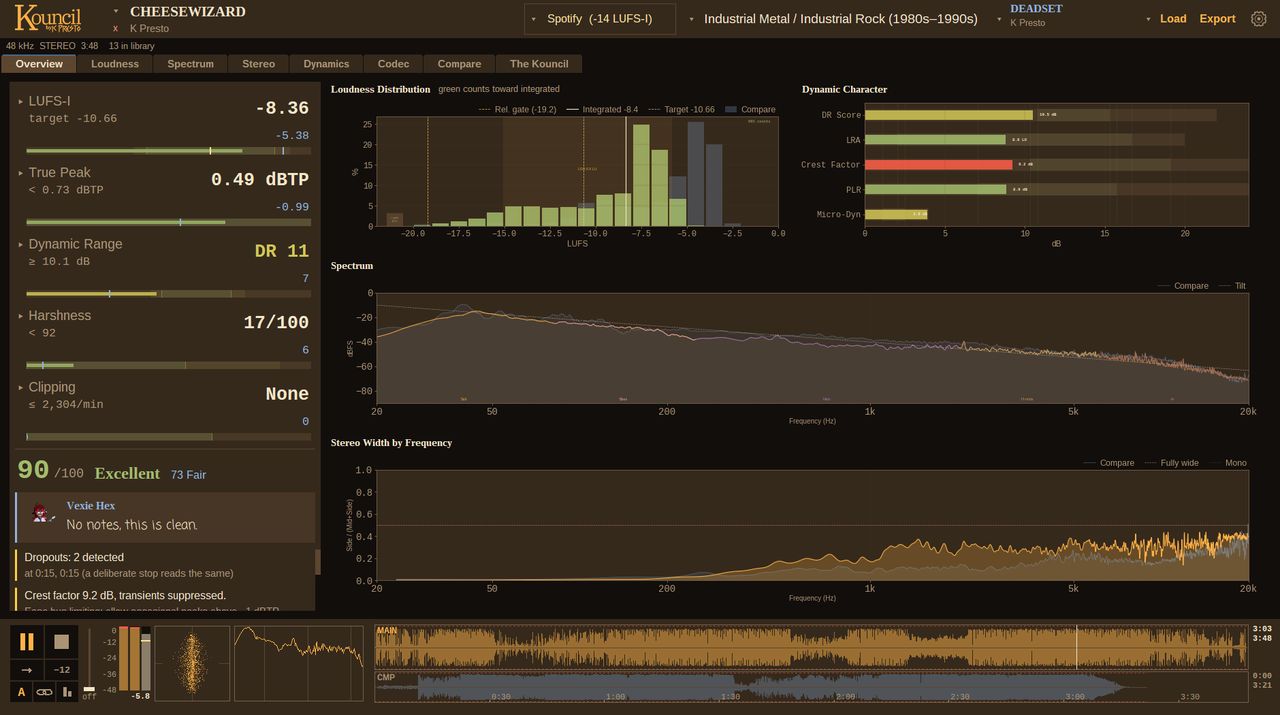
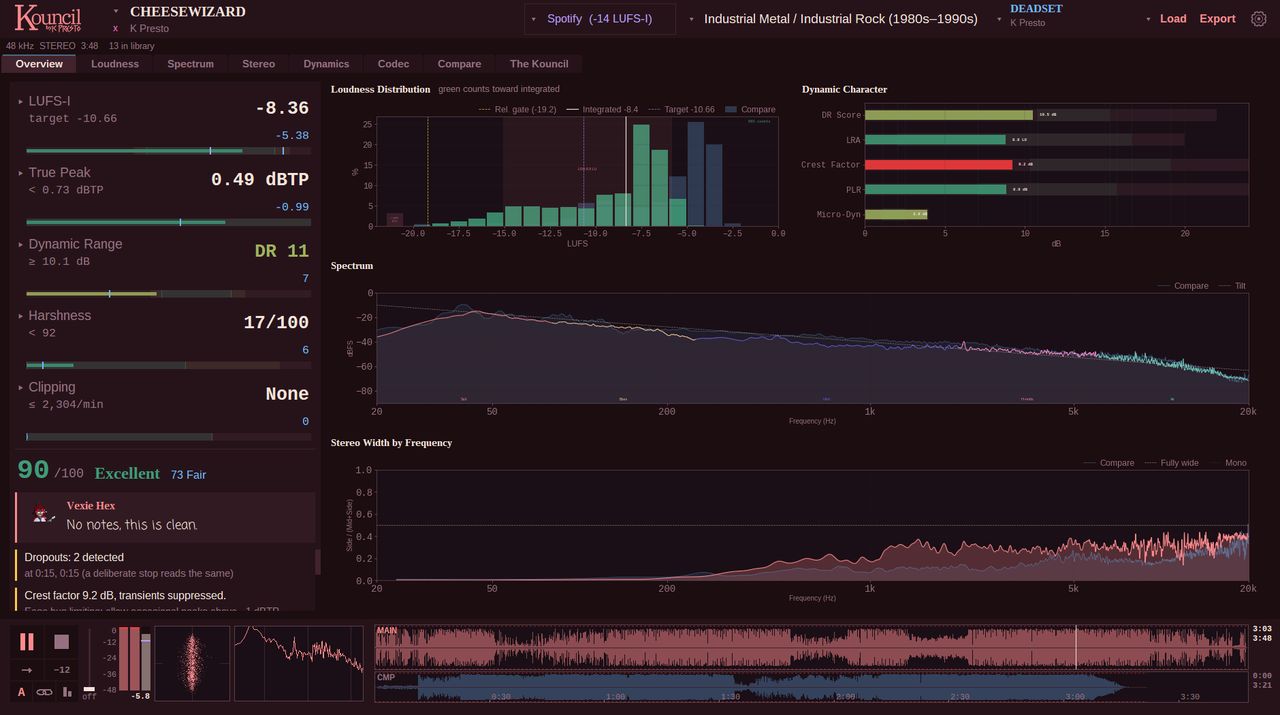
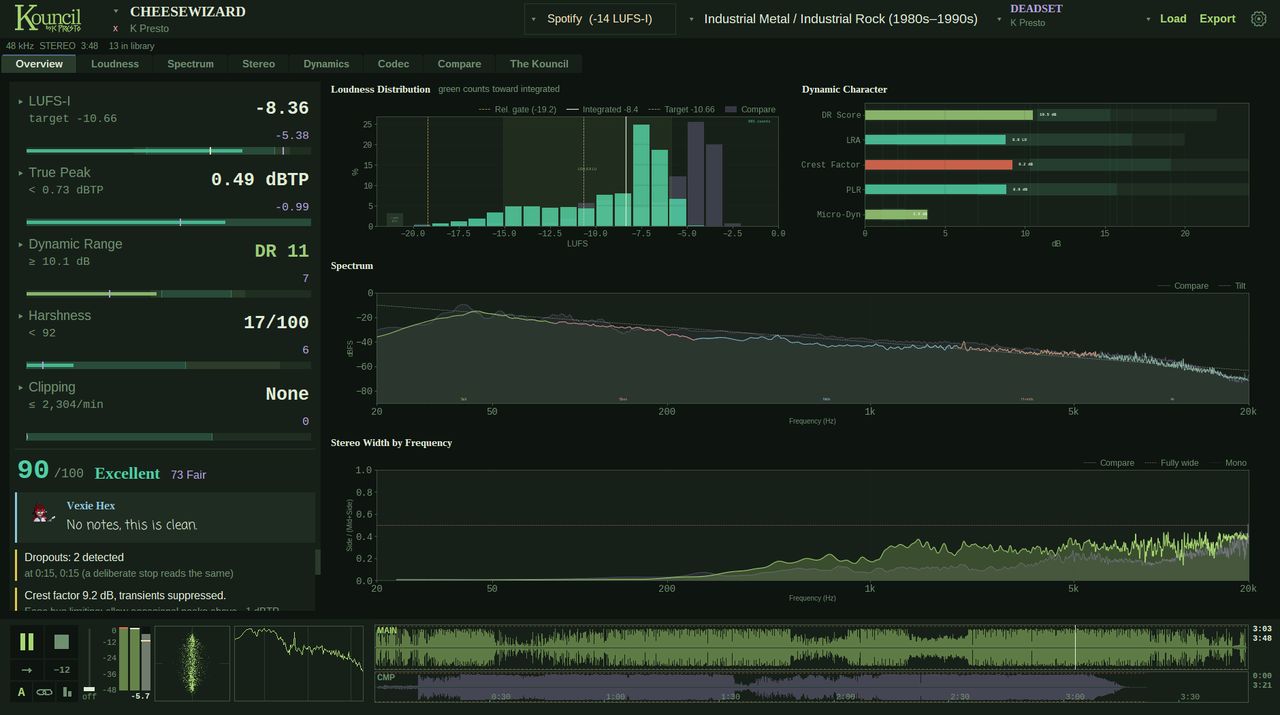
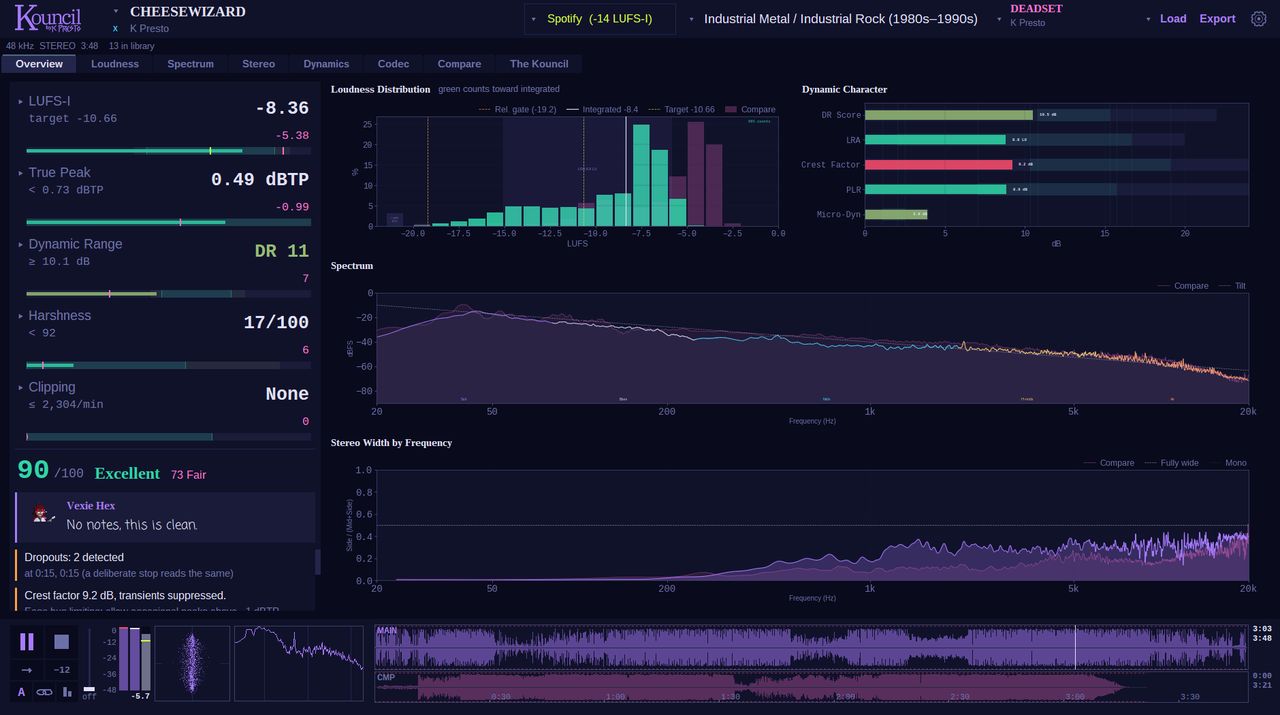
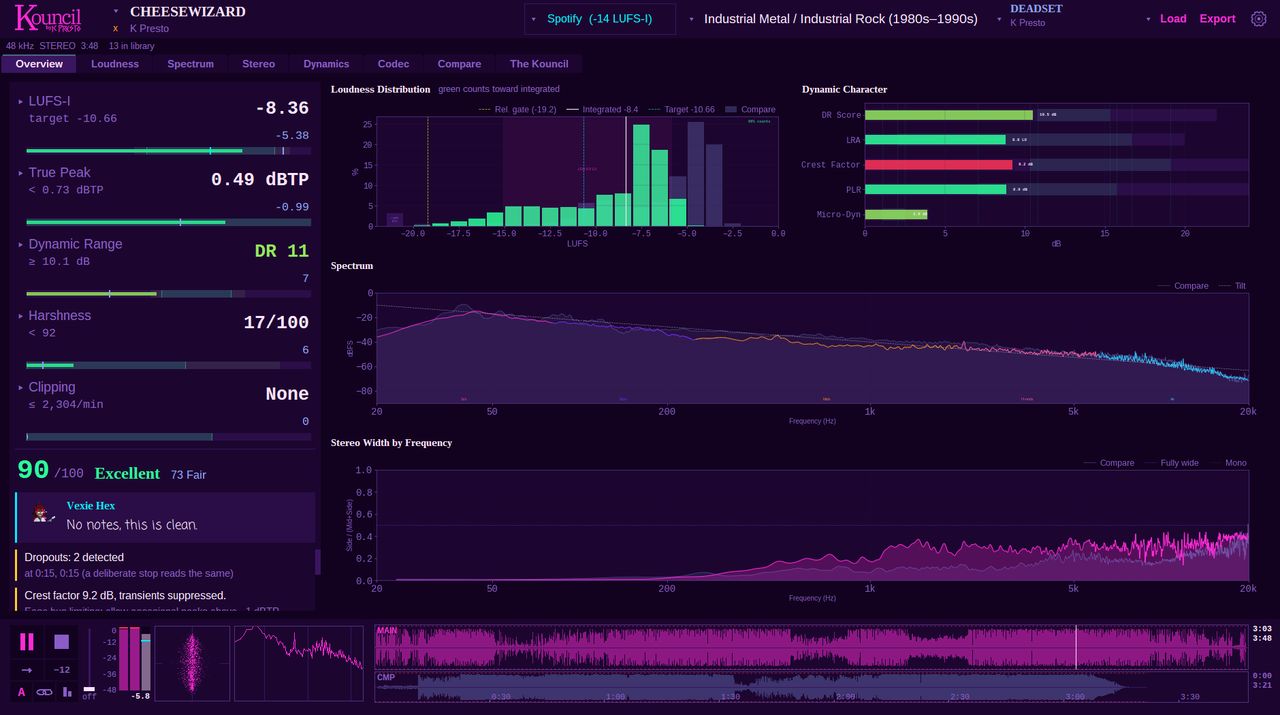
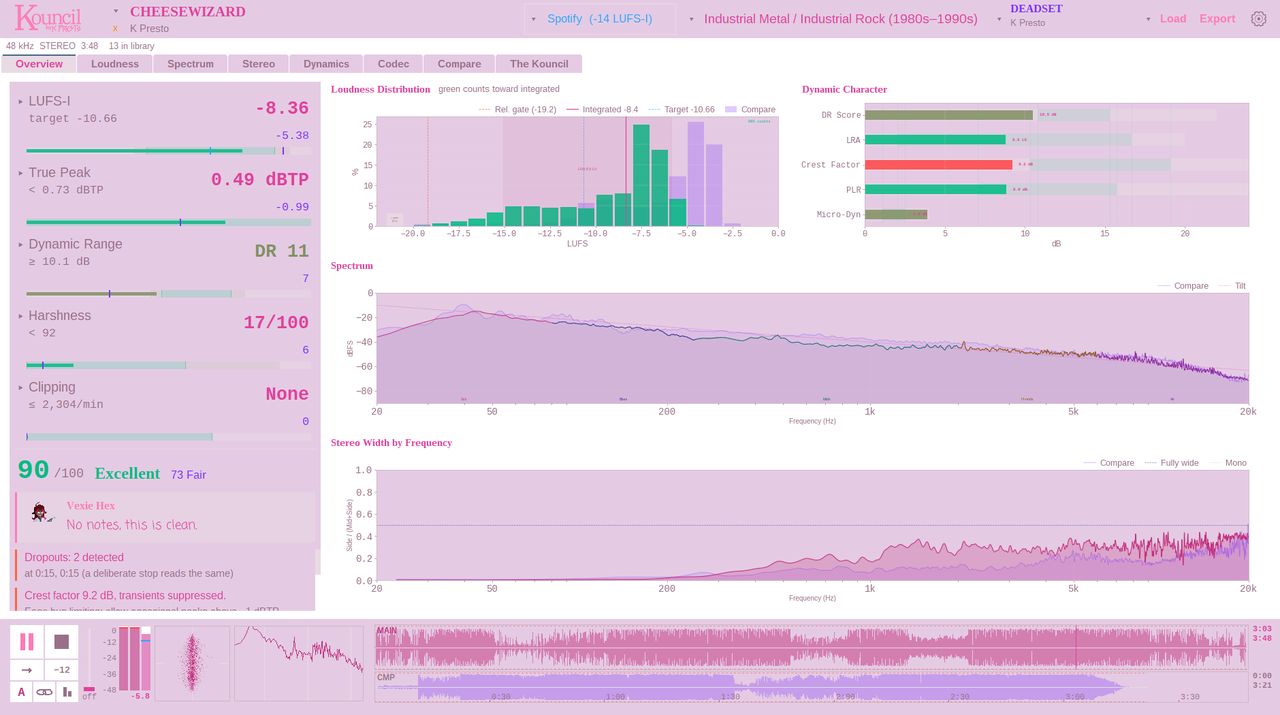
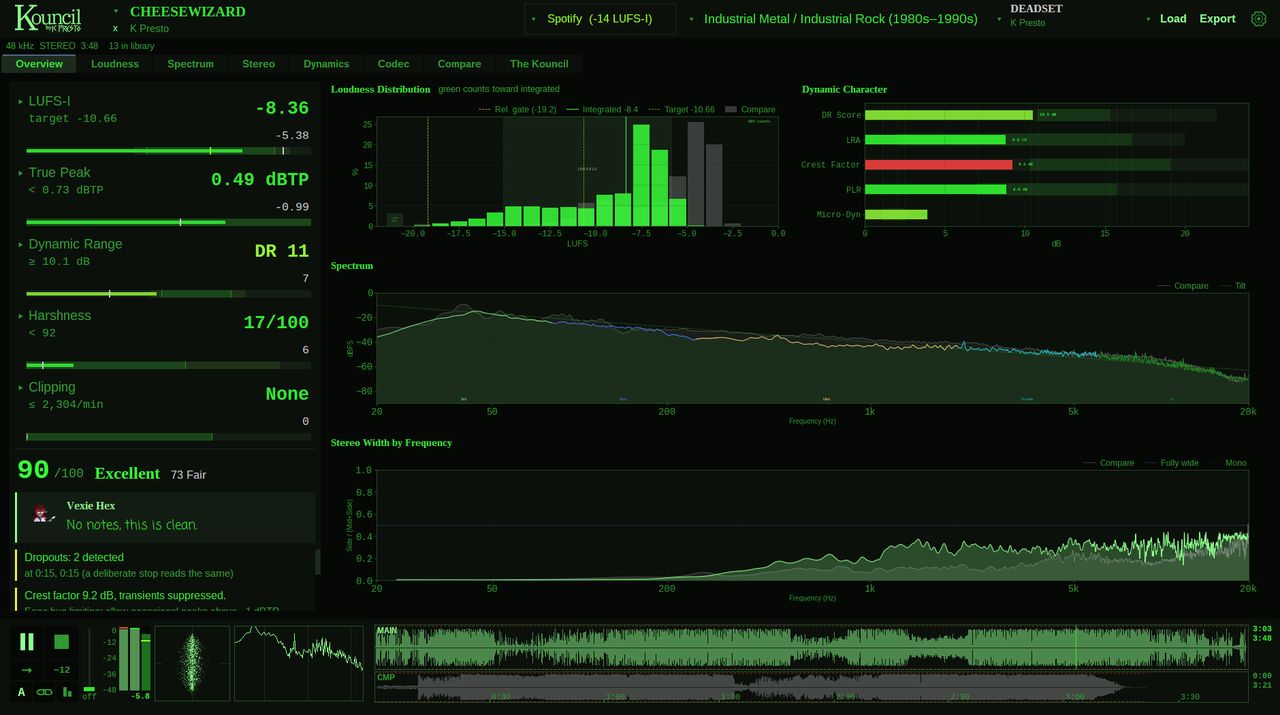
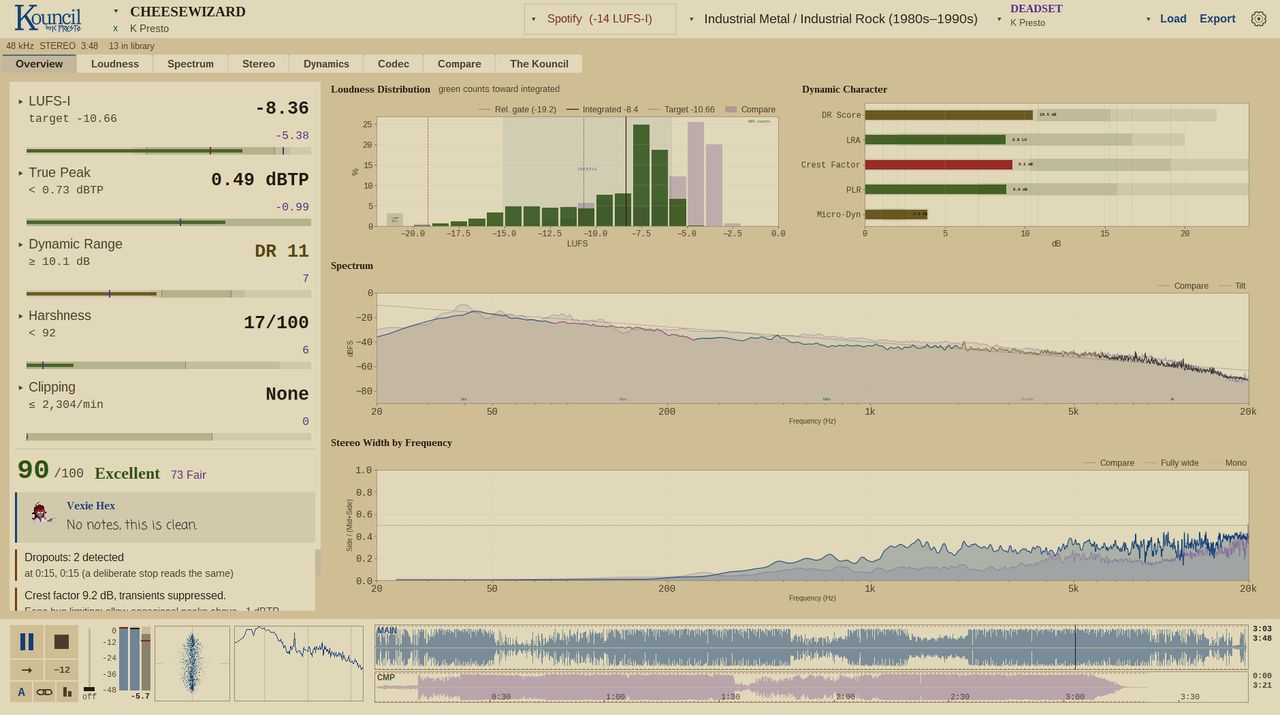
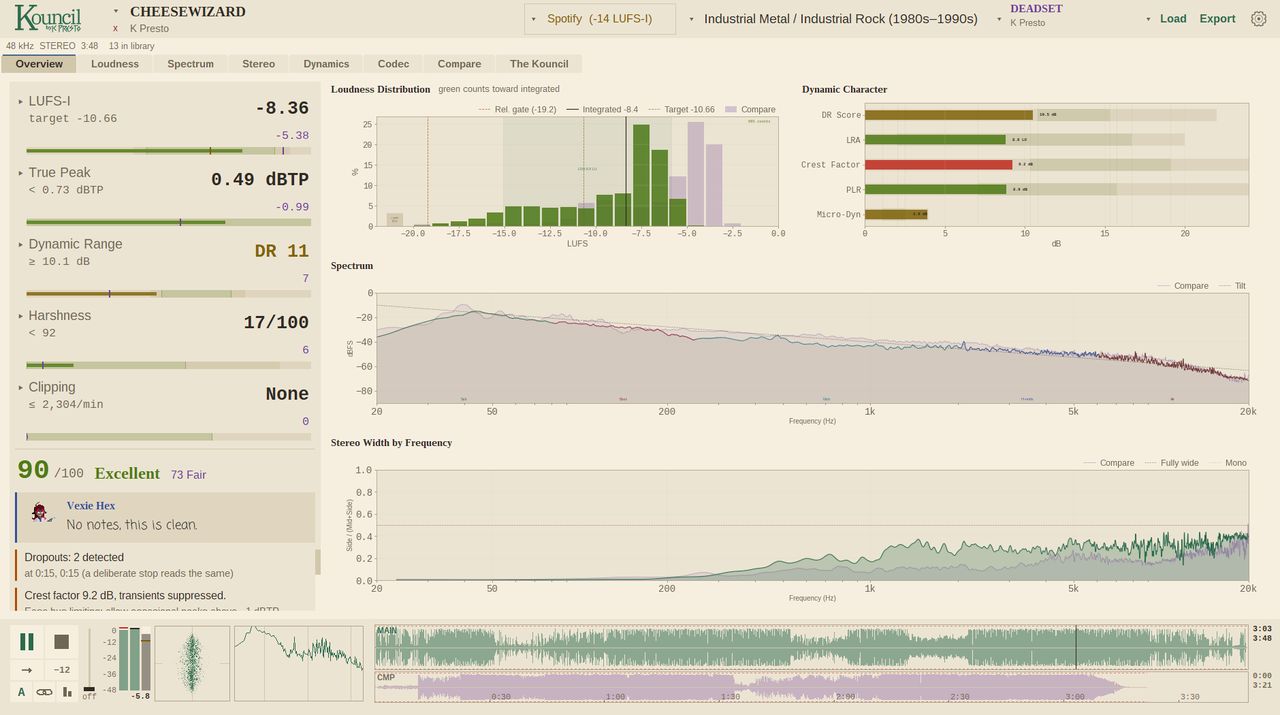
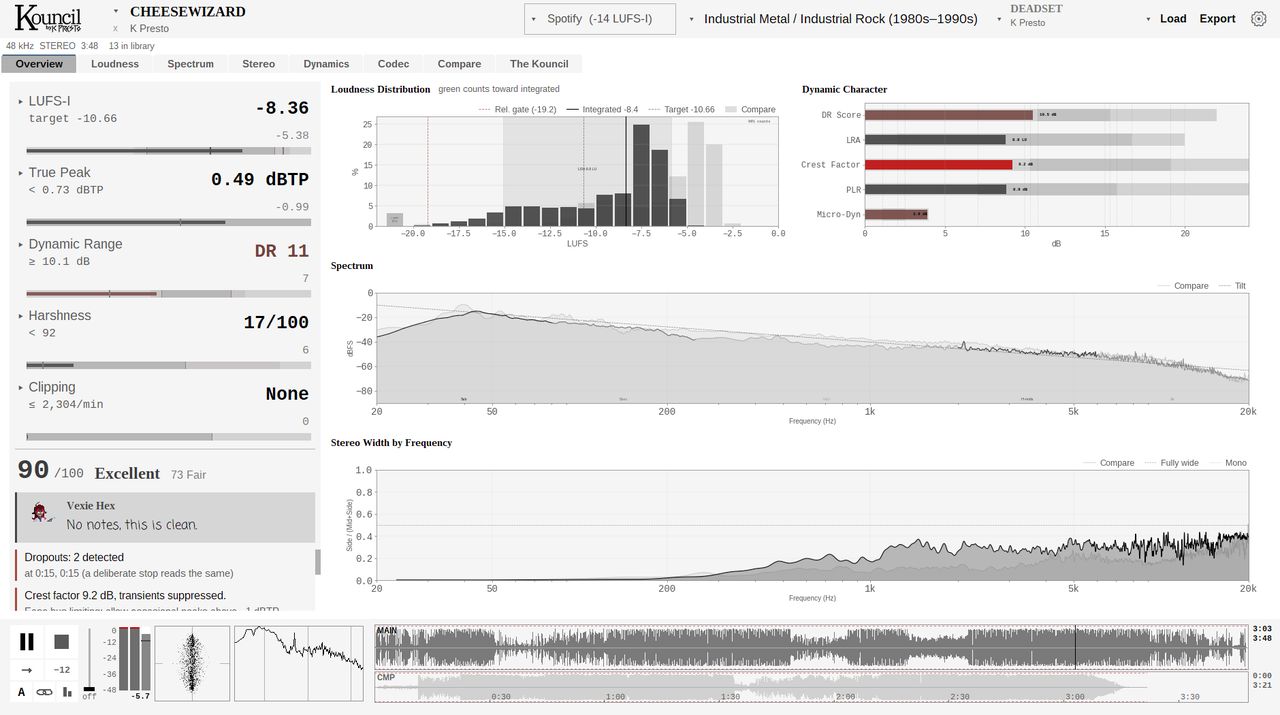
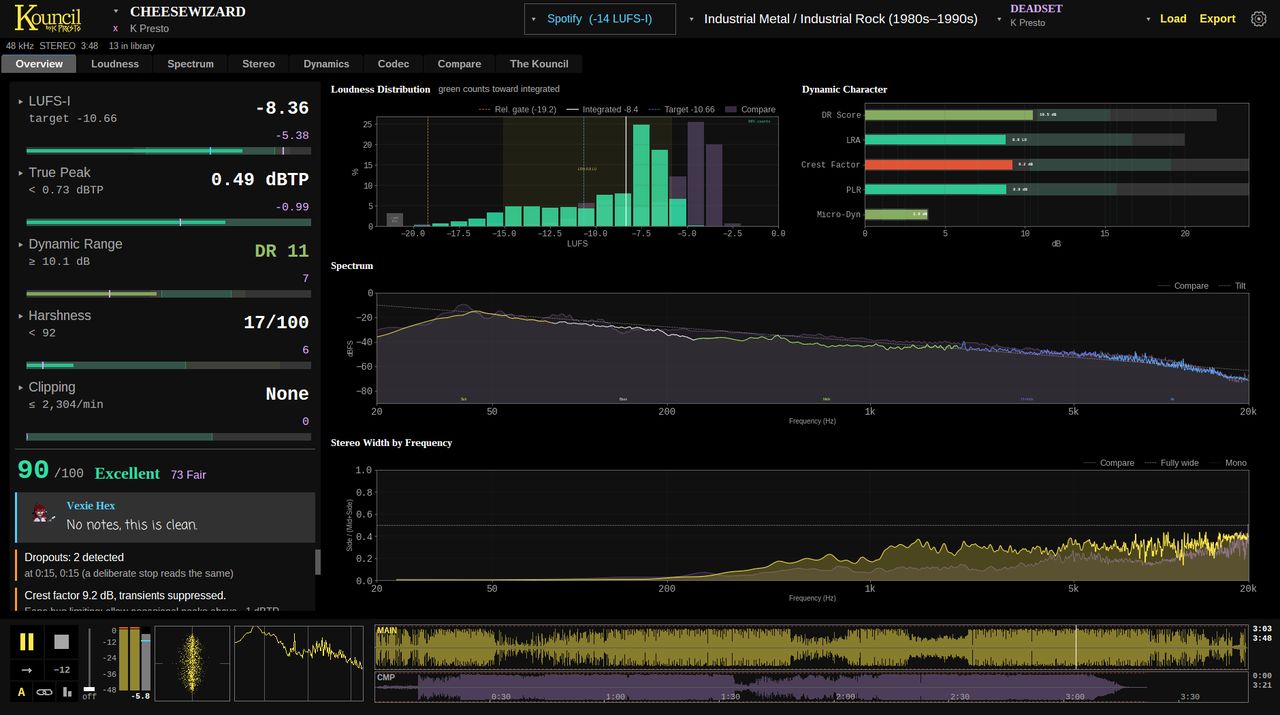
Twenty skins. Or make your own.
From high-contrast light to phosphor green. Every color, chart and export follows, and a built-in editor saves yours.
Under the hood
Measured properly.
- Standards-checked loudness
- ITU-R BS.1770 with the standard's own filters, tested against EBU Tech 3341 and cross-checked with ffmpeg's
ebur128. Oversampled true peak. - Real codecs, not models
- Every codec figure comes from an actual encode and decode, aligned to the original to the sample.
- Thresholds from data
- What gets flagged was set from measured commercial masters, not rules of thumb: 2,499 of them, across 100 genres.
- Glitch-free playback
- The audio engine runs in a process of its own, so a heavy analysis never stutters what you hear.
- Batch it
- A command line analyzes folders of tracks and builds profiles without opening a window.
- Yours, offline
- No account, no upload, no network connections. Your audio never leaves your computer.
Tech specs
What it reads, and how.
Audio files
- Formats
- WAV, AIFF, FLAC, ALAC, AAC, MP3, Ogg Vorbis, Opus. Lossless masters give the full picture
- Channels
- Stereo and mono. Surround files are mixed down to stereo
- Sample rate
- Any, measured at the file's own rate
- Bit depth
- Any, including 24-bit and 32-bit float, at full resolution
Measurement
- Loudness
- ITU-R BS.1770-4 / EBU R128: integrated, short-term, momentary, loudness range. Tested against EBU Tech 3341
- True peak
- 4× oversampled, per channel
- Codecs
- AAC 128 and 256, Vorbis 160, Opus 128, MP3 320, SBC 192, and two chains: Vorbis into SBC, AAC into AAC. Real encodes, at the sample rate each service sends
- Reference ranges
- 100 genre profiles measured from released records, or your own built from references
Output
- Reports
- PNG and JPG images, PDF, plain text
- Kouncil's own
- Snapshots (a track's whole analysis, reopened without the audio), profiles and skins, all shareable
Requirements
| Minimum | Recommended | |
|---|---|---|
| Windows | Windows 10, 64-bit | Windows 11 |
| Processor | 64-bit, 4 cores | 8 cores or more: tracks analyzed side by side |
| Memory | 8 GB | 16 GB: several tracks analyzed at once |
| Disk | 200 MB | Up to 1 GB more to keep codec versions ready to play (adjustable, or off) |
| Display | 1280 × 800 | 1920 × 1080 |
| Connection | None. Works offline, no account | |
Pricing
Free to start. Yours to keep.
Kouncil Lite is free for good. The full version is one payment, no subscription, and every 1.x update is included.
The verdict6 of 77 of 7
| Health score out of 100, with a grade | ||
|---|---|---|
| Findings, worst first | ||
| Where each problem is | ||
| The exact figure and the fix for every finding | ||
| Every point lost traced to the finding that cost it | ||
| Streaming readiness: Spotify, Apple Music, YouTube, Tidal, Amazon and more | ||
| Render checks: dropouts, repeated buffers, glitches, cut-off endings, DC jumps |
Judged against your genre5 of 88 of 8
| 100 genre profiles measured from 2,499 released records | ||
|---|---|---|
| Every metric judged against the genre's real range, not a rule of thumb | ||
| Tonal shape checked band by band against the genre | ||
| Told which other genre your track measures like | ||
| Profile Library: search, tags, favorites | ||
| Build a profile from your own reference tracks | ||
| Choose the statistic: median, trimmed mean, percentiles, Tukey fences | ||
| Share profiles as one file |
Loudness6 of 77 of 7
| Integrated loudness, BS.1770-4, tested against EBU Tech 3341 | ||
|---|---|---|
| True peak, 4x oversampled, per channel | ||
| Loudness range (LRA), short-term and momentary | ||
| Loudness Distribution with the gates drawn | ||
| Short-term Loudness over time | ||
| RMS and Crest Factor over time | ||
| PLR and PSR |
Tone6 of 1010 of 10
| Spectrum, with fine resolution in the low end | ||
|---|---|---|
| Tonal Balance against your genre | ||
| Resonance Map: resonances found like spectral lines, over time | ||
| Band Energy | ||
| Harshness index | ||
| Spectral tilt | ||
| Spectrogram | ||
| Mid / Side spectrum | ||
| Equal-loudness (Fletcher-Munson) and LUFS-weighted views | ||
| Low-volume translation and perceptual DR |
Stereo4 of 77 of 7
| Goniometer | ||
|---|---|---|
| Correlation and width | ||
| Stereo Width Heatmap: width per band, the whole track | ||
| L/R Balance per band | ||
| Phase Correlation by band | ||
| Stereo Width by frequency and over time | ||
| Mono compatibility: bass lost in mono, band by band |
Dynamics2 of 77 of 7
| Dynamic Range (DR), crest factor | ||
|---|---|---|
| Dynamic Character at a glance | ||
| Micro-dynamics | ||
| Transient profile and attack slopes | ||
| Dynamics per band | ||
| Pumping, measured from the envelope's modulation | ||
| Section contrast and transient density |
Streaming and Bluetooth codecs5 of 1111 of 11
| Real encodes, decoded and measured, not estimates | ||
|---|---|---|
| Spotify over Bluetooth (Vorbis 160 into SBC 192) | ||
| Apple Music (AAC 256) | ||
| AAC 128, Opus 128, MP3 320, SBC 192 and AAC 256 twice over | ||
| Listen to every version | 2 of 8 | |
| Hear only what a codec changed (DIFFERENCE, NORMALIZE) | ||
| Scorecard: every codec, every measure, side by side | ||
| True-peak overshoot, pre-echo, transient fidelity, stereo collapse | 2 of 8 | |
| Error spectrum against the masking threshold | ||
| Artifact timeline, width change over time | ||
| Codec consistency score |
Listening5 of 66 of 6
| Playback with peak meters, loudness, live goniometer and spectrum | ||
|---|---|---|
| Play a range, loop it | ||
| Solo a band from the band charts | ||
| Drag across any chart to hear only that range | ||
| A/B against a reference, level-matched, playheads in sync | ||
| Soloed bands held under full scale, so nothing clips |
Albums0 of 66 of 6
| Compare against the library average | ||
|---|---|---|
| Every track side by side, outliers marked | ||
| The running order as one chart, the loudness step at every join | ||
| Drag to reorder, click a join to hear the transition | ||
| Radar of every track against the genre | ||
| Overlaid spectra and stereo width |
The Kouncil3 of 33 of 3
| Four characters, from a listener to an audio scientist | ||
|---|---|---|
| Every chart, number and setting explained four ways | ||
| The Kouncil's scene: each character's take, with the chart it's about |
Reports2 of 77 of 7
| Image export, laid out for you | ||
|---|---|---|
| Character notes on exports | ||
| Page editor: place, scale and style every element by hand | ||
| PDF report | ||
| Text report | ||
| Export presets | ||
| Snapshots: a whole analysis, reopened without the audio |
Workflow6 of 88 of 8
| WAV, AIFF, FLAC, ALAC, MP3, AAC, Ogg Vorbis, Opus, at the file's own rate | ||
|---|---|---|
| Drag and drop; the last session comes back | ||
| Analyze a folder at once | ||
| Command line: analyze and build profiles without a window | ||
| Twenty skins, and a skin editor | ||
| Text size and app scale | ||
| Works offline: no account, nothing uploaded | ||
| Windows |
- Try the full version for 14 days from inside Lite.
- Students and teachers: 40% off.
- Your license works offline. No account, nothing sent anywhere.
- Windows.
Ask the Kouncil.
Kouncil is in closed beta. Testers who send real reports get a full license.
TaylorHonestly? Load your song, look at the score, read the first red thing, fix it. That's most of it.
Vexie HexBounce it, load it, fix the worst thing on the list, bounce again. Keep going until the list is short.
Kate AdagioPick the profile closest to the record, then work the findings top down and measure again after every change.
K0ndukt0rProcedure: load, correct the largest deduction, load again. Repeat until the remaining deductions are ones you chose.
Reference
- The manualEvery tab, chart and setting
- The manual as a PDFThe same, for printing
- Algorithm referenceEvery measurement, with its method and sources
From the dev blog
- Optimizing Resolution with Split FFTsSep 22, 2026
- The Kouncil MembersSep 16, 2026